How John Saunders Turned CNC Videos Into a Manufacturing Business


In 2005, John Saunders worked a desk job in New York City and tried to bring a product to market. He bought a small milling machine to make prototypes and learn machining. In May 2007, he uploaded his first video to a YouTube channel called NYC CNC. Without formal training, he documented what he was learning, including his mistakes and the parts he managed to produce.
In 2014, Saunders returned to his hometown of Zanesville, Ohio, and founded Saunders Machine Works. The YouTube channel became a source of customers for both his machining classes and machining business. By December 2018, the company employed six people. Today, it manufactures fixture plates and workholding equipment, while NYC CNC has grown to 461,000 subscribers. In 2023, Saunders said the business could generate more revenue by lunchtime on a typical weekday than the YouTube channel earned in an entire month.
A Banker Buys a Small Mill
Saunders grew up on a farm in Ohio and graduated summa cum laude from Babson College. He worked as an analyst in JPMorgan's real estate investment banking group and as a vice president at Petrus Partners, a New York real estate private equity firm.
Saunders became interested in machining while trying to develop his own product. He initially hired outside machine shops to manufacture parts but struggled to follow technical discussions with engineers. In a 2018 interview with The Amp Hour podcast, he recalled feeling out of his depth during those meetings. To better understand the manufacturing process, he bought a Taig benchtop milling machine and installed it in his one-bedroom apartment. An engineer helping him develop the product had warned him against buying a CNC machine because he lacked the skills to operate one. Saunders spent the next two years learning machining in the evenings and on weekends.
In 2010, Saunders and his wife moved to the suburbs because the larger milling machine he wanted would not fit in their apartment building's freight elevator. That October, he ordered his first Tormach mill, a PCNC 1100. Saunders used the machine to manufacture thousands of products while continuing to work his day job.
Filming Mistakes for an Audience
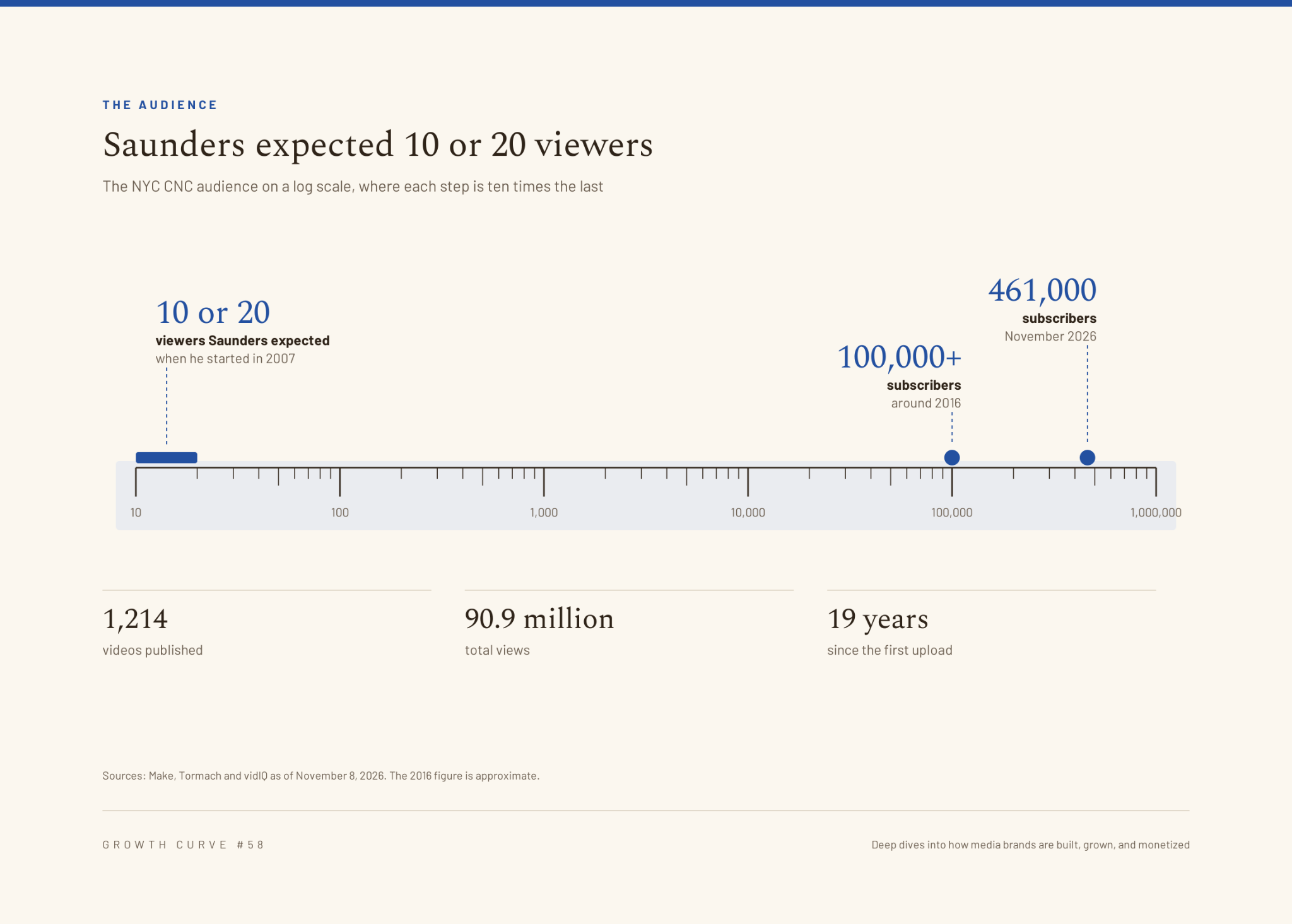
Saunders started his YouTube channel to share what he was learning with the online machining forums that had helped him get started. He expected only 10 or 20 people to be interested in his CNC machining videos. The channel initially generated no income. When YouTube started paying him, he recalled that his first $100 in monthly earnings barely covered three drinks in New York City.
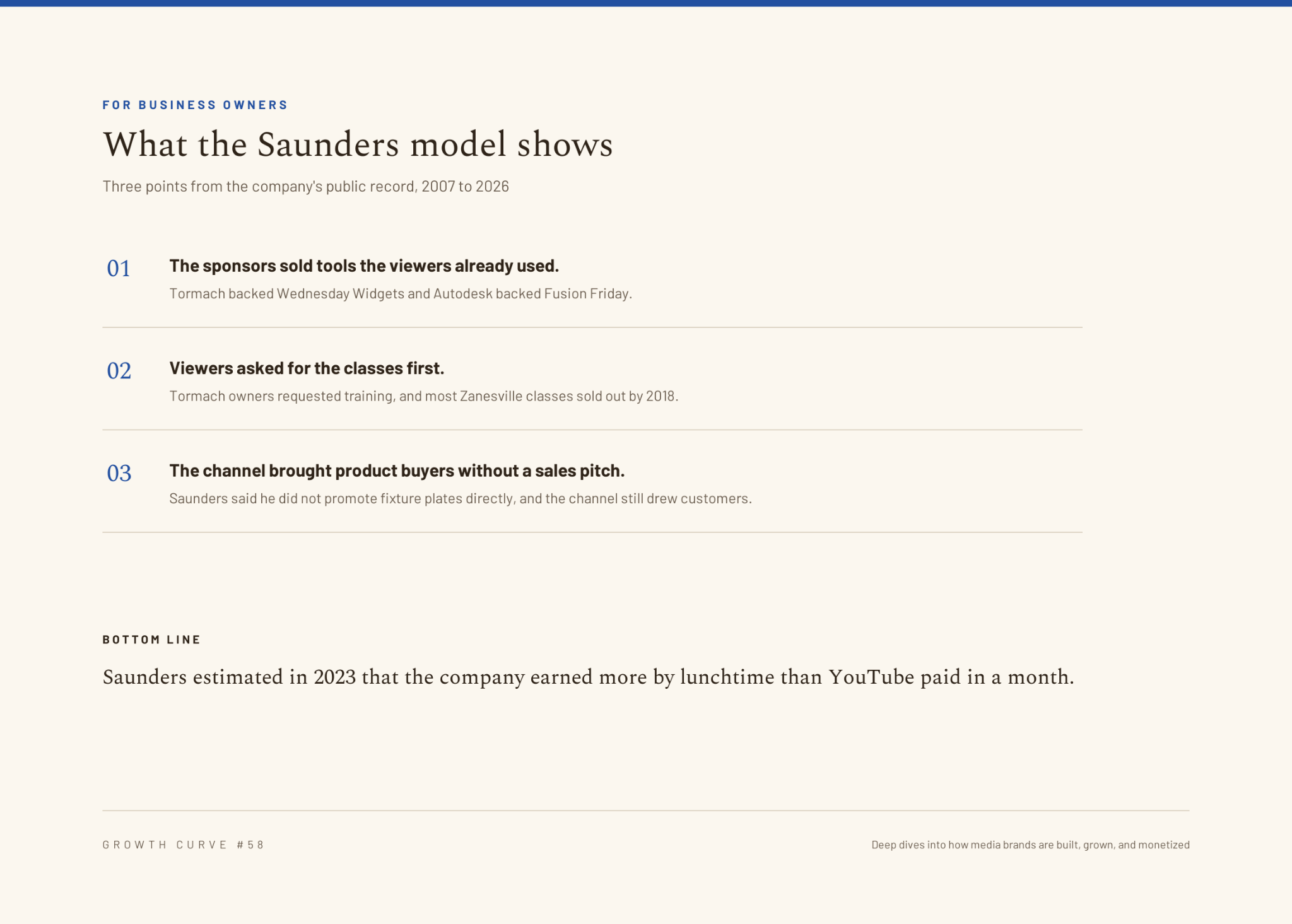
His videos covered the subjects he was learning at the time, including CAD and CAM software, welding, and Arduino projects. He eventually introduced two recurring series. Tormach sponsored Wednesday Widgets, while Autodesk sponsored Fusion Friday, which focused on software tutorials. Both sponsors offered products directly relevant to his audience of machining hobbyists and small shop owners.
Zanesville Turns Viewers Into Customers
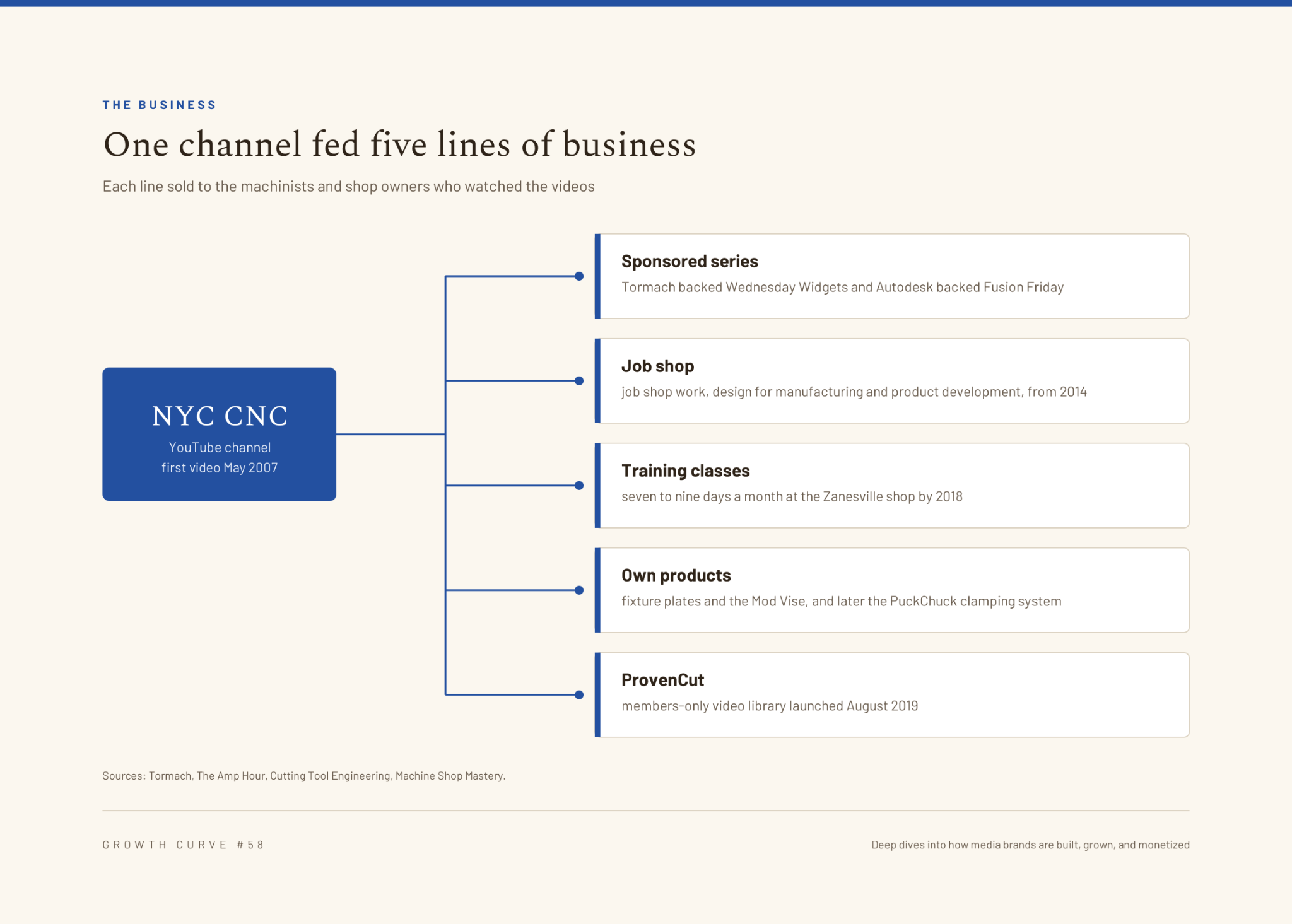
Moving to Zanesville gave Saunders the space to establish a proper machine shop. He kept the NYC CNC name because the YouTube channel had already built a substantial audience. Saunders Machine Works began offering job shop services, design for manufacturing, and product development, and he hired his first employee as the business expanded.
In an interview with Tormach, Saunders explained that he didn't see his company as a traditional machine shop because he spent much of his time producing videos. The channel had also become an important source of customers. "The channel has grown quite a bit in popularity, and really, that's our source of traffic for the training classes and job shop stuff," he said. By around 2016, NYC CNC had more than 100,000 subscribers, and Saunders was publishing two videos a week.
Sold-Out CNC Classes
Saunders began offering classes after companies and individuals who had purchased Tormach machines repeatedly requested private training. Many offered to fly him to their facilities, but he preferred to remain in Ohio. Instead, he established a training program at his Zanesville shop and began promoting classes to his audience.
By February 2018, the program had been running for two years, offering seven to nine days of instruction each month, with most classes selling out. A two-day Fusion 360 course costs $300, while a three-day hands-on machining class costs $1,175. Students could also attend a two-day advanced course, and many stayed for the entire week.
Saunders estimated that between one-third and half of the students came from companies, with participants ranging in age from 15 to 89. Interest in the shop extended beyond formal training. Nearly 400 people from several countries attended an open house in Zanesville.
Turning Weekly Business Conversations Into a Podcast
Saunders met John Grimsmo, a Canadian knife maker who had also built a following on YouTube, at a Tormach event in 2015. They began speaking every Friday morning to discuss their businesses and the challenges of running machine shops. A friend eventually encouraged them to record their conversations, which became the Business of Machining podcast.
In an interview with The Amp Hour, Saunders said he was frustrated by accounts that portrayed every business as successful and acknowledged that entrepreneurship could be lonely. The podcast offered a more practical account of running a small manufacturing business, covering topics such as budgeting, hiring, accounting software, and machine crashes.
The Product That Changed Saunders Machine Works
By February 2018, Saunders Machine Works was shifting its focus from contract machining to developing and selling its own products. Its main product was the fixture plate, a precisely machined plate with a grid of holes that attaches to a CNC machine table and reduces setup time. The company also developed the Mod Vise, a modular vise system. Both products addressed workholding, which Saunders considered one of machining's most difficult aspects. By December 2018, the company had six employees and continued publishing at least one YouTube video each week.
The shift toward proprietary products also brought larger commercial customers. In an April 2023 podcast episode, Saunders estimated that purchase orders from businesses accounted for 30-40% of company revenue. The company expanded its educational offerings with ProvenCut, a members-only video library. Saunders Machine Works spent more than a year and a half developing the platform before launching it in August 2019.
Beyond YouTube Revenue
In a March 2023 podcast episode, Saunders explained how the YouTube channel supported his manufacturing business. Although he didn't directly promote fixture plates in his videos, he said the channel's visibility and branding played an important role in attracting customers. He estimated that by lunchtime on a typical weekday, the company had already generated more revenue than YouTube paid him in an entire month.
The Evolution of Saunders Machine Works
As of November 8, 2026, vidIQ reported that NYC CNC had 461,000 subscribers, 1,214 videos, and approximately 90.9 million views. The Business of Machining podcast remains active too.
Saunders Machine Works has continued investing in manufacturing technology, automation, and internal operations. In a September 2025 interview, Saunders discussed a custom ERP system managing thousands of SKUs, along with automated horizontal machining centers and Willemin mills. The company has also expanded its workholding products with PuckChuck, a zero-point clamping system. Beyond his own business, he serves on the board of Toolpath, a manufacturing software company. In September 2026, Manufacturing Magazine named him one of its 10 leading manufacturing influencers.
NYC CNC began as a record of Saunders teaching himself machining. By 2018, his audience helped him build a manufacturing business that generated nearly $1 million in annual revenue, according to The New York Times. The channel initially brought customers to his training classes and job shop services, then helped him build a product business selling fixture plates and workholding equipment.
For business owners, Saunders's experience shows the value of building an audience with a clear commercial interest. His viewers learned machining, bought equipment, and ran workshops, making them potential customers for training and workholding products. That audience gave him opportunities to earn through sponsorships, education, and physical products. It also reduced his dependence on advertising revenue and let him build a business around his expertise.
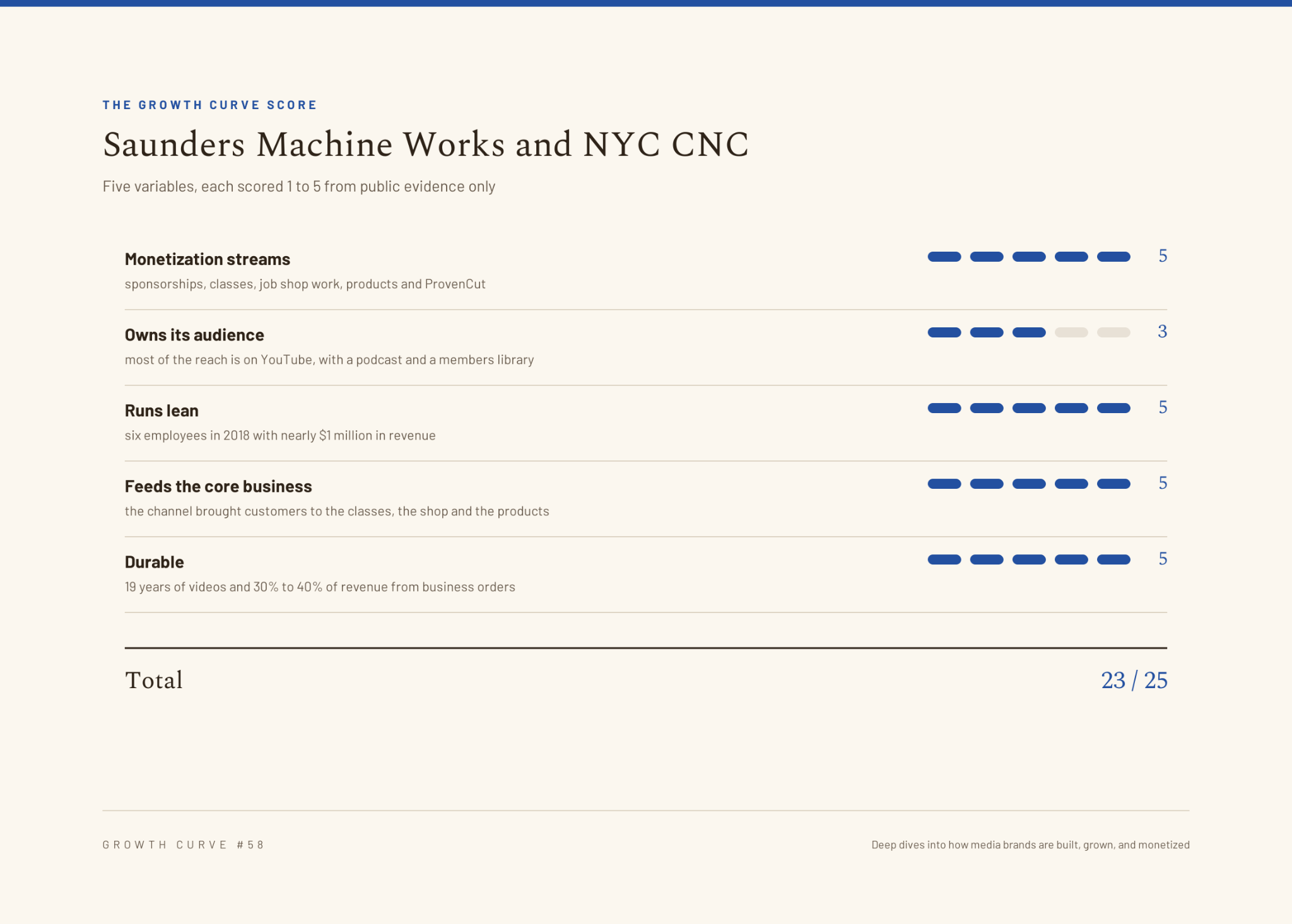
Growth Curve Score
Your newsletter won't build itself.
