How to Measure B2B Newsletter ROI (The Attribution Guide)
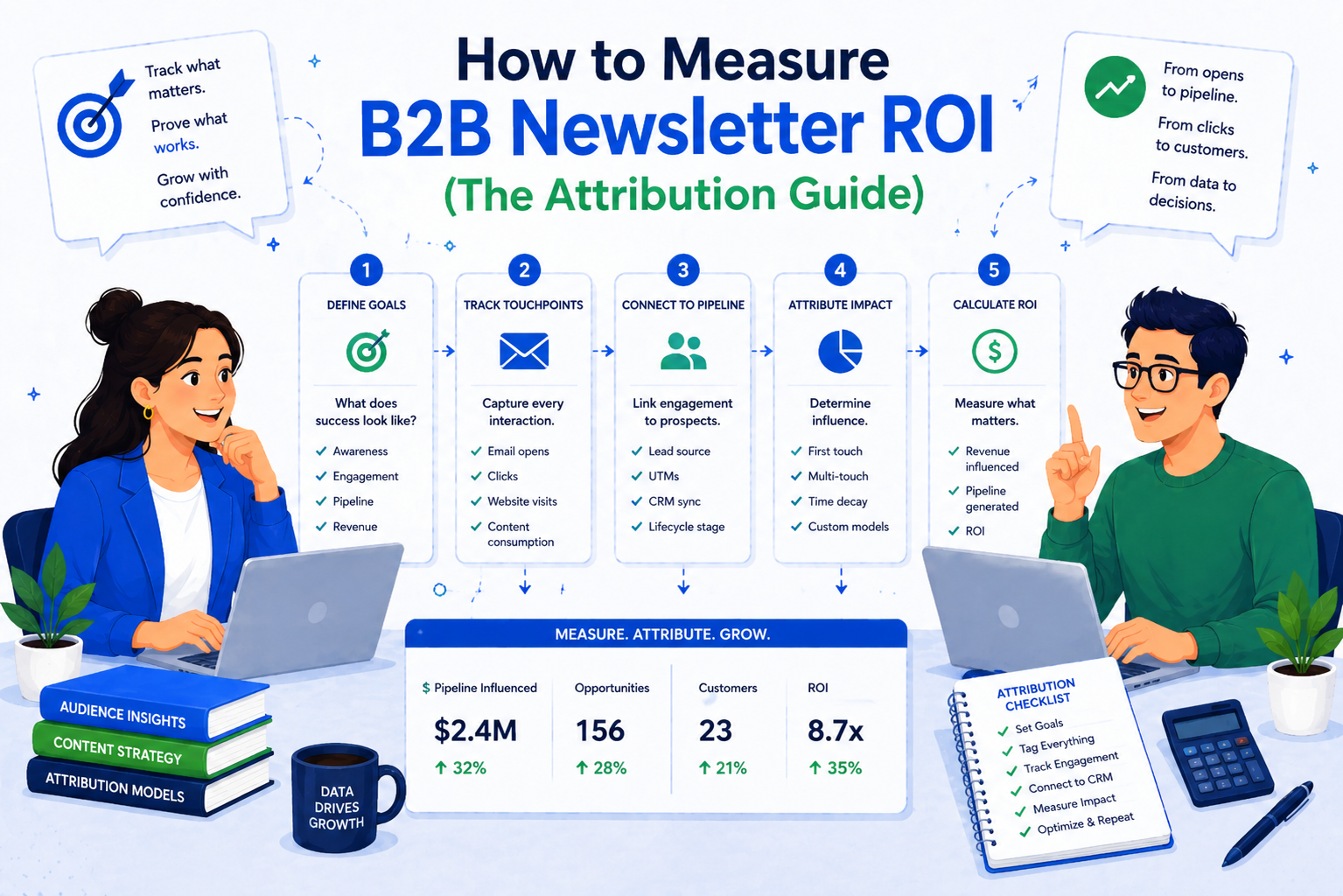

Everyone wants to know if their newsletter is working. Most companies look at open rates, shrug, and decide it's probably fine.
That's the wrong question and it's why so many newsletters get quietly cancelled after six months.
Open rate tells you whether people opened an email. It says nothing about whether your newsletter is generating pipeline, compressing sales cycles, or retaining customers. Those things are harder to measure, but they're the ones that justify the investment.
This is the attribution guide we wish existed when we started working with B2B clients. No vanity metrics. Just the numbers that connect newsletter activity to business outcomes.
Why Newsletter Attribution Is Hard - And Why That's Not an Excuse to Skip It
Newsletter attribution is imperfect by design. Unlike paid ads, you can't draw a straight line from a single send to a signed contract. The newsletter works over time, across multiple issues, influencing a buyer who was already in your orbit.
That's not a flaw. It's how trust-based marketing works.
The mistake is treating "hard to measure" as "impossible to measure." You can build a credible picture of newsletter ROI with the right tracking in place it just requires a different approach than last-click attribution.
The Metrics That Actually Matter
1. Subscriber Growth Rate
A growing list of people who match your ICP is a measurable asset. Track total subscribers, month-over-month growth rate, and the percentage of your list that fits your ideal buyer profile.
A list of 800 subscribers at your target job titles is more valuable than a list of 5,000 with no filter. Track quality, not just count.
2. Engagement Rate (Open + Click)
B2B newsletters with a focused, qualified audience should see open rates of 35–50%. Below 25% is a signal that either your list has quality issues or your subject lines are underperforming.
Click rate matters too - but only if you're putting links worth clicking. A 3–5% click rate on a specific CTA is meaningful. A 0.5% click rate on a buried resource link tells you nothing.
3. Reply Rate
This is the most underused metric in B2B newsletter measurement.
When a subscriber replies to an issue, something important has happened: a warm lead has appeared in your inbox without a single cold outreach email sent. They're engaged, they know your thinking, and they took the friction of actually replying to tell you something.
Track how many replies you receive per issue. Track how many of those turn into booked calls. In our experience, reply rate is the single most reliable leading indicator of a newsletter that's generating pipeline.
4. Subscriber-to-Pipeline Conversion
This is the metric that silences every CFO who questions the newsletter budget and it requires CRM setup to track properly.
Tag all newsletter subscribers in your CRM. Then, at the end of every quarter, run a simple query: of the deals closed this quarter, how many of those contacts were newsletter subscribers? How does their average deal size compare to non-subscribers? How long did they take to close?
Across our client work, newsletter subscribers close faster and at higher rates than leads from other sources. That's the compound effect of showing up in someone's inbox for six months before they ever booked a call.
5. Pipeline Influence
Pipeline influence is broader than conversion it tracks any deal where a newsletter subscriber was involved, regardless of whether the newsletter was the original source.
The scenario: a prospect comes in through a Google ad. They subscribe to your newsletter. They spend three months reading your content. They book a call and close. The newsletter didn't generate the lead but it almost certainly influenced the close. Pipeline influence captures that.
Setting Up Your Tracking
You don't need a complex tech stack to track newsletter ROI. You need three things:
- A newsletter platform that integrates with your CRM (Beehiiv connects directly to HubSpot, for example)
- A subscriber tag in your CRM so you can segment newsletter readers
- A quarterly habit of running the pipeline overlap report described above
The UTM setup matters too. Tag every link in your newsletter with UTM parameters so traffic from newsletter clicks shows up correctly in your analytics. Use a consistent naming convention -- utm_source=newsletter, utm_medium=email, utm_campaign=[issue-name] and you'll be able to see exactly which issues drove the most website behaviour over time.
What to Do With the Data
The point of measurement isn't to prove the newsletter works. It's to improve it.
If reply rate is low, your content isn't prompting engagement. Look at whether you're asking questions, taking clear positions, or just summarising information.
If subscriber-to-pipeline conversion is low, your list quality may be the issue. Who's subscribing? Are they your ICP or are they mostly competitors and curious students?
If engagement is dropping, your subject lines or content relevance is slipping. Look at which issues had the highest and lowest open rates and find the pattern.
The companies that build strong newsletter ROI aren't the ones who set it and forget it. They're the ones who treat it like any other revenue channel, review the numbers, find the weak points, fix them.
The Bottom Line
You will never have perfect newsletter attribution. Accept that upfront.
What you can have is a credible, consistent picture of how your newsletter is contributing to pipeline & enough data to defend the investment internally and improve performance over time.
Build the tracking before you need it. Running a CRM overlap report after 12 months of untagged data is an exercise in frustration. Set up subscriber tagging now, even if your list is small, and the data will be there when you need it.
Spacebar Studios helps B2B companies build newsletters that generate pipeline, not just opens. If you want to see what that looks like for your business, book a free strategy call with the team at spacebarstudios.co/inquire. On the call, we'll look at your current situation and tell you honestly whether a newsletter makes sense right now.
Not ready for a call? Subscribe to Growth Curve Newsletter - the weekly newsletter for business owners and marketers who want to understand how media brands actually generate revenue.
Your newsletter won't build itself.

Paid Newsletter Subscriber Acquisition: What Actually Works for B2B
Newsletter Referral Programs for B2B Companies: Do They Actually Work?

How to Use LinkedIn to Grow Your B2B Newsletter in 2026