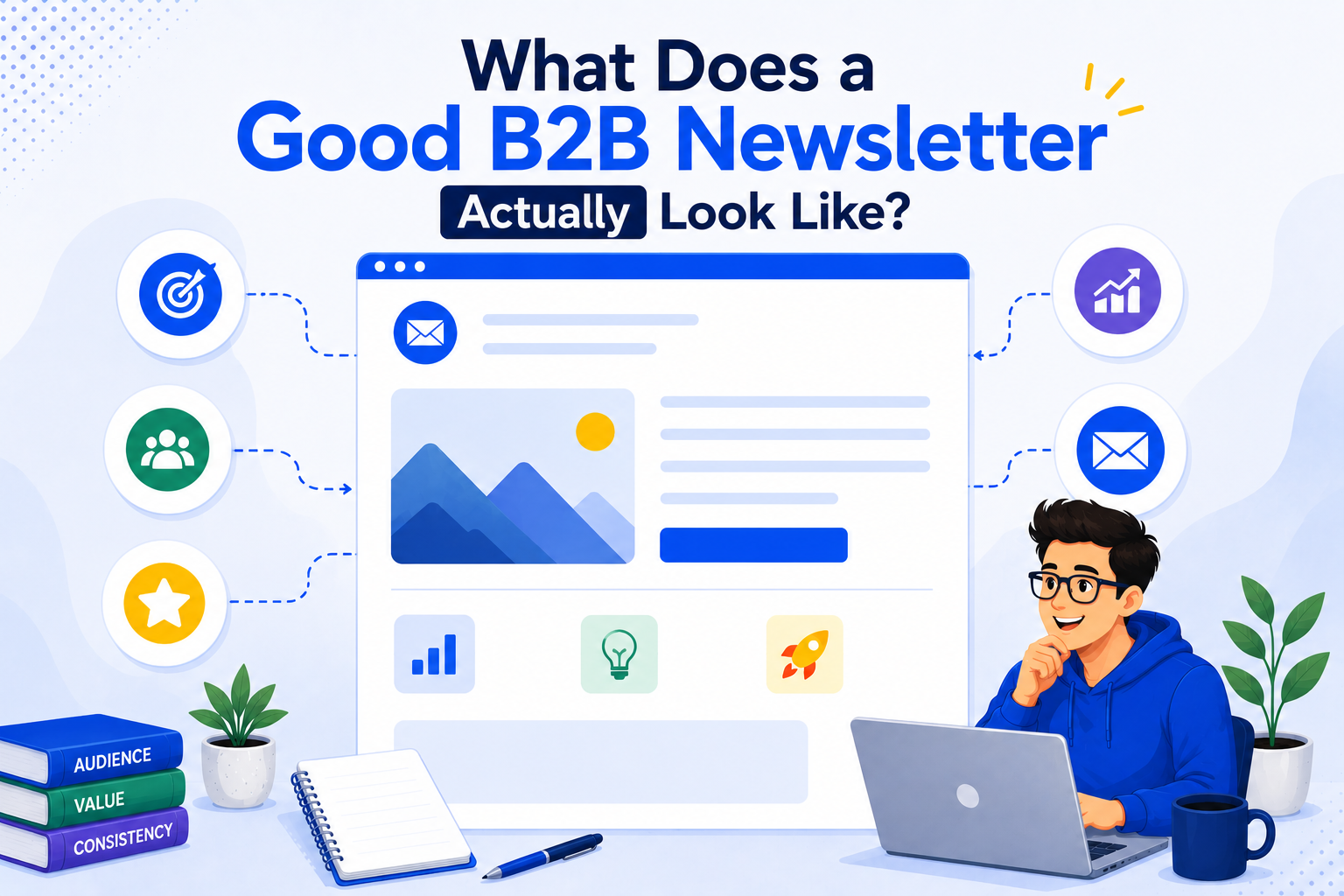
The Business Case for a B2B Newsletter in 2026


TL;DR
A B2B newsletter is the one marketing channel you fully own, with no algorithm and no platform rent, and a direct line to buyers' inboxes. The business case is that it compounds trust over time and influences pipeline, which is why it outperforms rented channels like social over the long run.
Here's the pitch you've probably already heard: you should start a company newsletter. A marketing consultant said it. Someone in a LinkedIn comment said it. Maybe your head of marketing brought it up in a quarterly planning session.
And here's why you haven't done it yet: the case always sounds like a content marketing argument, not a business argument. "Build an audience." "Stay top of mind." "Become a thought leader." None of that tells a CEO or a founder what they actually want to know — will this generate revenue, and how?
This article makes the business case. Not the marketing case. The business case.
The Channel Problem Every B2B Company Is Ignoring
Most B2B companies are built on rented land.
Their traffic comes from Google. Their audience lives on LinkedIn. Their leads come from paid ads. Every one of those channels is controlled by someone else, and all three are getting harder and more expensive to use.
You've probably already felt this. A LinkedIn post that got 400 likes two years ago now gets 40. Company page reach has dropped to single-digit percentages. Google is flooded with AI-generated content, and ranking for anything competitive now requires more budget, more backlinks, and more time than it did three years ago. Paid acquisition costs keep climbing while conversion rates stay flat.
None of these channels are going away. But every one of them can change the rules on you without warning. They have before. They will again.
A newsletter is different. When someone subscribes to your newsletter, you have their email address. You can reach them directly, on your schedule, without paying a platform for the privilege. No algorithm decides which of your subscribers sees your content this week. You own the relationship.
That's the foundational argument. But it's not the interesting one.
What is the business case for a B2B newsletter?
It is the argument that owning a direct audience of email subscribers is more valuable than renting reach on social platforms, because you can reach buyers on your own schedule, build trust through consistency, and influence pipeline without paying a platform for access.
What a Newsletter Actually Does for a B2B Business
The "owned audience" argument is real but abstract. Here's what it looks like in practice for a B2B company with a sales team and a pipeline to fill.
1. It warms leads your sales team hasn't touched yet
B2B sales cycles are long. A company that's the right fit for your product today might not have budget until Q3. Or they're locked into a contract with a competitor for another 18 months. Or the decision-maker you need to reach just changed jobs.
Your sales team can't stay in front of all of these people manually. A newsletter can.
Every issue you send reaches the entire population of people who were interested enough to subscribe — including people your sales team hasn't spoken to in months, prospects who went cold, and potential buyers who haven't raised their hand yet. When they're finally ready to buy, you're not starting from zero. You've been in their inbox, consistently, for the past six months.
2. It keeps you in front of your entire pipeline
Most CRM systems track active deals. They're not built to keep you in front of the much larger group of people who are almost deals — former leads, lapsed prospects, people who attended a webinar but never booked a call.
A newsletter reaches all of them in one send. The prospect who filled out a form eight months ago and then went quiet. The person who downloaded your pricing guide but never replied to the follow-up. The former customer who left for a competitor. They're all on your list. They're all reading.
3. It builds the kind of trust that shortens sales cycles
There's a real difference between a prospect who finds you through a Google ad and a prospect who has been reading your newsletter for three months. The second one already knows how you think, what you believe, and whether you know what you're talking about. By the time they book a call, half the sales work is already done.
CB Insights built one of the best-known newsletters in the B2B data space. They don't need to explain who they are on a sales call. Their subscribers already know. That's not brand awareness in the abstract sense. That's a compressed sales cycle — and it shows up in close rates.
What B2B Newsletter ROI Actually Looks Like
The measurement question is where most newsletter conversations break down. "How do I know it's working?" is a fair question. The honest answer is that newsletter attribution is imperfect. Not because newsletters don't drive revenue, but because they drive it in ways that standard tracking tools don't capture cleanly.
Here's what you can measure:
Subscriber growth rate: A growing list of people who match your ICP is a measurable asset. Track it monthly.
Engagement rate: Open rates for well-managed B2B newsletters typically run 35–50% — compared to single-digit organic reach on LinkedIn for the same content. The people on your list are actually reading what you send.
Reply rate: The single most underused metric in B2B newsletters. When a subscriber replies to an issue, a warm lead has arrived in your inbox without a single cold email sent. Track how many of those replies turn into sales conversations.
Pipeline influence: This takes more setup — you need to tag newsletter subscribers in your CRM and track overlap with closed deals. In our experience working with B2B clients, subscribers consistently convert at higher rates and move through the pipeline faster than leads from other sources.
None of this is as clean as "we spent $10,000 on ads and generated $40,000 in pipeline." But dismissing newsletter ROI because it's hard to attribute is the same mistake as dismissing your sales team because not every call results in a signed contract.
Why 2026 Is the Right Time to Start
The business case for newsletters has been true for years. Here's what's different now.
AI has made content more abundant and less trusted. Every competitor in your space can now produce 50 blog posts a month using AI. Search results are increasingly full of content written to rank, not to be useful. In that environment, a newsletter from a real person with a clear perspective gets read and acted on. Authenticity is scarce right now. Scarcity creates value.
The inbox is less crowded than you think. Everyone assumes email is oversaturated. For consumer newsletters, that's true. For a B2B newsletter targeted at a specific audience — say, finance leaders at mid-market logistics companies — the inbox is surprisingly quiet. The bar for "worth subscribing to" is lower than it's ever been relative to the noise everywhere else.
First-mover advantage in most B2B niches is still available. Most industries have two or three dominant voices with newsletters. The rest of the field is mostly companies posting on LinkedIn twice a week and calling it content marketing. Build a newsletter worth reading in your category and you can own that position for years. Once someone trusts a newsletter, they rarely go looking for another one.
What Makes a B2B Newsletter Actually Work
The business case is there. The execution is where most companies get stuck. Here's what separates newsletters that build pipeline from ones that get archived.
A specific audience
"Our customers" is not a newsletter audience. "Operations leaders at manufacturing companies with 50–500 employees" is. The more specifically you define who you're writing for, the easier every other decision becomes.
A consistent point of view
The newsletters people actually read don't summarize industry news. They tell you what to think about it. Your newsletter needs a perspective, not just a content calendar.
Consistency over brilliance
A newsletter that goes out every Tuesday at 8am for two years will outperform a brilliant newsletter that ships whenever someone gets around to it. The trust compounds with every issue you send on time.
Patience
Newsletters don't generate pipeline in month one. They generate it in month six, seven, eight. Most in-house newsletters don't die from bad content. They die at month three, when growth looks flat and the project gets deprioritized. The companies that push through that plateau are the ones that see the return. The ones that stop at 12 issues stop right before the compound effect would have kicked in.
Is a Newsletter Right for Your Business?
The honest answer is: not for everyone.
A newsletter is a good fit if you have a long sales cycle, you're selling to a specific definable audience, and you have — or can develop — genuine perspective on your industry. Professional services firms, B2B SaaS companies, recruitment agencies, financial services companies: these tend to see strong results because their buyers research carefully and trust takes time to build.
It's probably not the right move if you need leads in the next 30 days, if your audience is too broad to write specifically for, or if you have nothing useful to say. A newsletter built entirely on AI-generated content with no real perspective will not build trust or generate pipeline. It will just add to the noise.
The question to ask isn't "should we start a newsletter?" It's: what do we know that our buyers would find genuinely useful, and are we willing to share it consistently for 12 months? If the answer is yes, the business case is there.
Owned newsletter vs rented social reach
- Audience ownership: Newsletter, you own the subscriber list. Social, the platform owns the audience.
- Reach control: Newsletter, you can reach your whole list any time. Social, the algorithm decides who sees you.
- Trust: Newsletter, it compounds with every issue. Social, it is fleeting and feed-dependent.
- Cost over time: Newsletter, an owned asset that compounds. Social, pay-to-play to maintain reach.
- That matches the format of the other 3 posts. Once it's in, all 4 commercial posts are complete on the citation-ready content. Want me to re-check the live post afterward to confirm it landed.
The Bottom Line
Every marketing channel you rely on today is rented. Google can change its algorithm. LinkedIn can throttle your reach. Ad costs can double overnight. None of those things can happen to your email list.
But beyond the ownership argument, the real case for B2B newsletters in 2026 is simpler: they work. They warm leads your sales team can't reach manually. They keep you in front of your entire pipeline between conversations. They build the kind of trust that shortens sales cycles and improves close rates.
The companies that figured this out five years ago are operating with a compounding advantage today. The companies that figure it out this year still have time to build something meaningful.
The ones that keep waiting will eventually be paying to sponsor someone else's newsletter to reach the audience they could have built themselves.
Spacebar Studios has helped 50+ B2B companies build newsletters that generate pipeline, not just opens. If you want to see what that looks like for a company like yours book a call with the Spacebar team. On the call, we'll look at your current situation and tell you honestly whether a newsletter makes sense for your business right now.
Not ready for a call? Sign up to our newsletter Growth Curve where we send one issue a week on what's actually working in B2B newsletter marketing.
Your newsletter won't build itself.

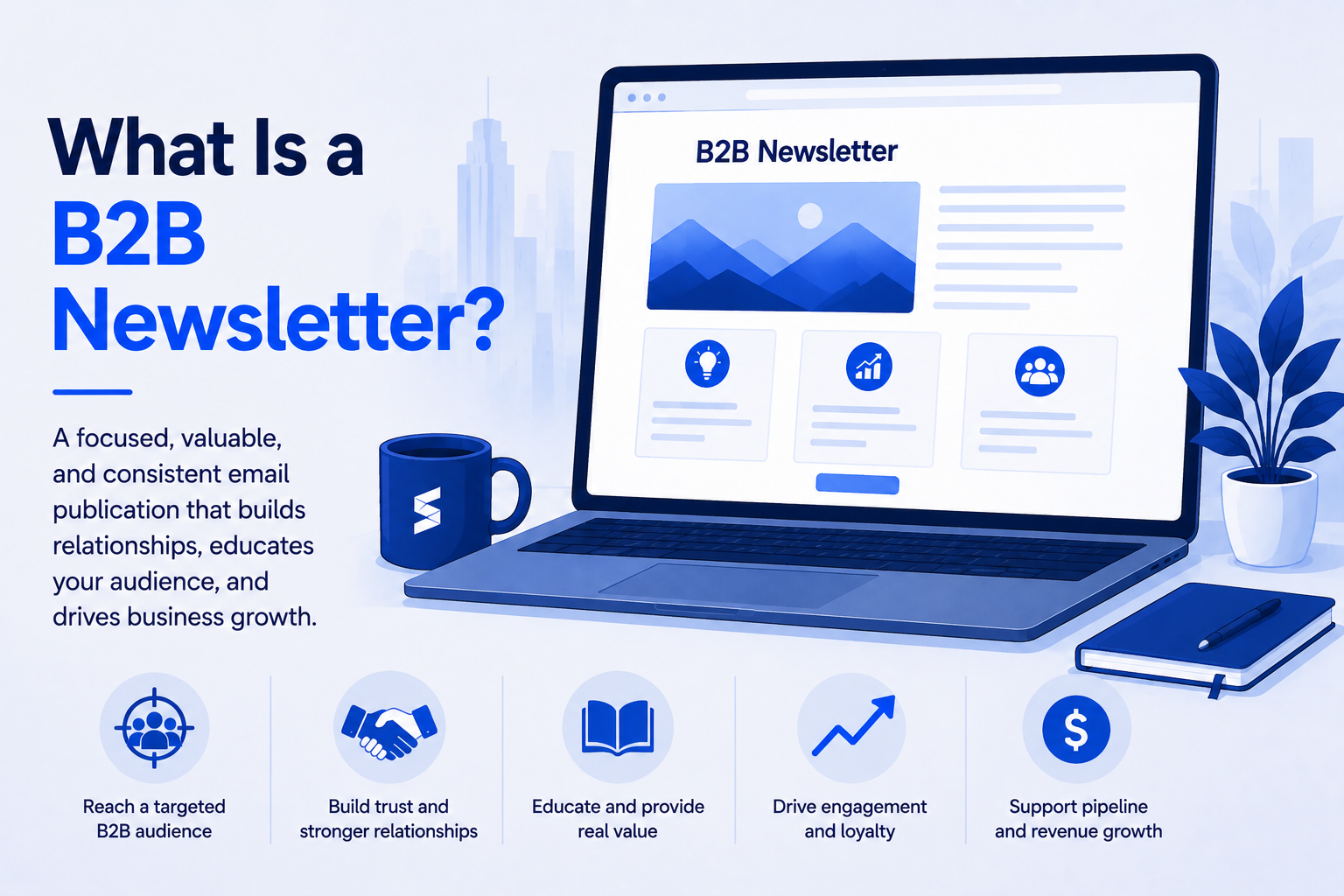
What Is a B2B Newsletter? (And How It's Different From a Consumer One)
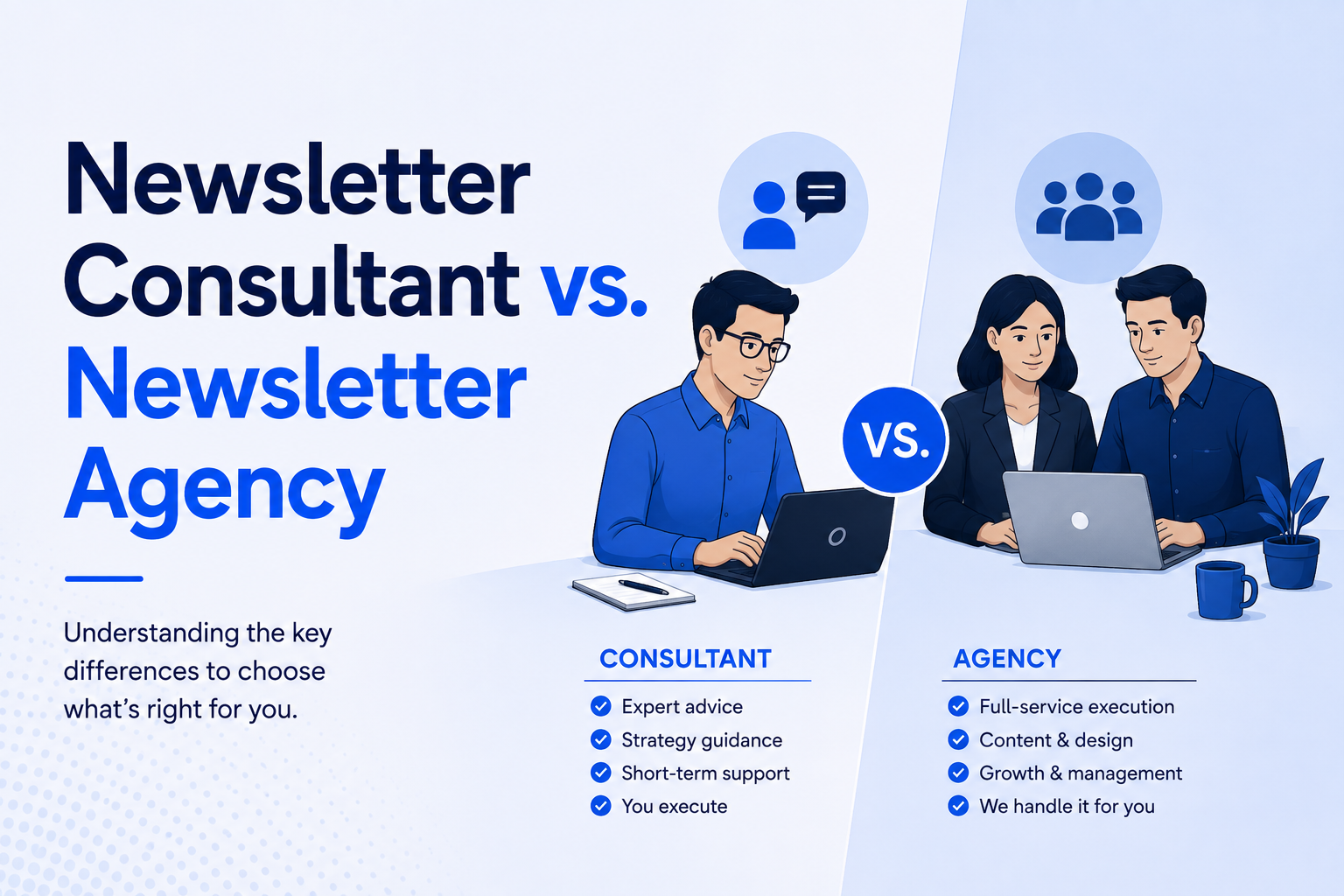
Newsletter Consultant vs. Newsletter Agency: Which One Actually Moves the Needle?
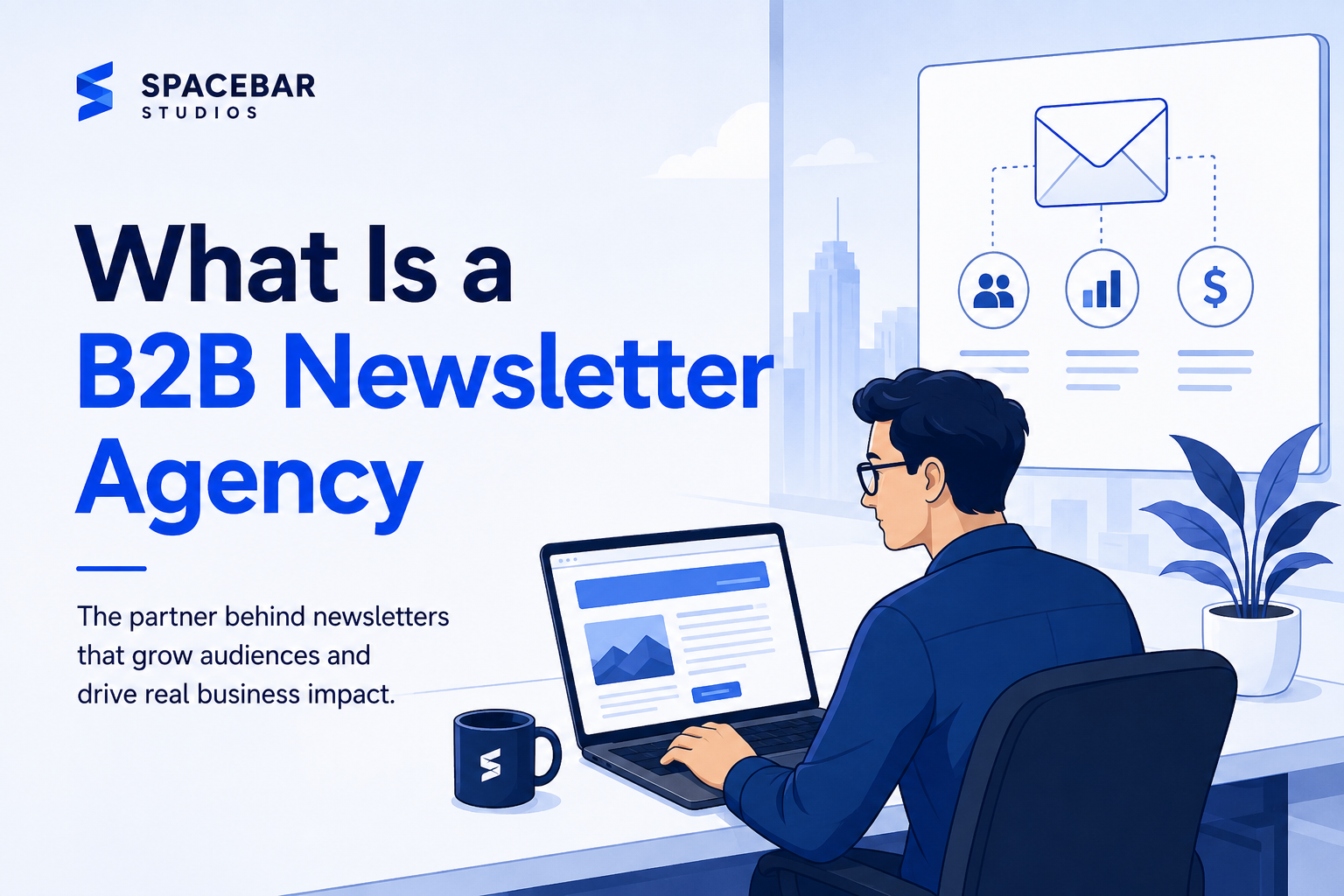
What Is a B2B Newsletter Agency (And What They Actually Do)