How Patrick O'Shaughnessy Turned a Personal Learning Habit Into One of the Most Valuable Audiences in Finance


*** Every week, we pick apart how the world's best media brands got to where they are. This post is the long read. Growth Curve, our weekly newsletter, is the sharp version: same insight, shorter format, straight to your inbox. Subscribe free here. ***
------------
Patrick O'Shaughnessy recorded the first episode of Invest Like the Best in 2016 because he was frustrated with books. As he put it in a later interview, 'I was frustrated by how imprecise even the best book on a topic was, as it related to my specific questions and curiosities. When I went to the world's best expert on whatever, I got exactly what I wanted quickly, with higher impact.' The podcast was a shortcut to better thinking, not an attempt to build a media company. He was also running O'Shaughnessy Asset Management at the time. No capital was raised for the show, and there was no team. He showed up and asked questions.
Eight years later, those questions had been downloaded almost 100 million times. Colossus, the company he formalized around the show in 2020, now runs a network of more than half a dozen podcasts, hosts high-end investor events, and publishes a quarterly print magazine. It reaches an estimated five million unique listeners a year, with shows that regularly rank in the top 50 of their categories. The sponsors are Ramp, Vanta, WorkOS, and Ridgeline B2B tools, whose ideal customer is almost exactly the person listening to Invest Like the Best on a Monday morning commute.
Colossus grew by going deep on a specific type of person, the professional investor or serious operator who reads everything, listens to everything, and will always want one more conversation with someone smarter than them.
The Self-Funding Loop
Before Colossus existed as a company, O'Shaughnessy's entire operation ran alongside his day job. 'There was no capital raised,' Matt Reustle, host of Business Breakdowns and then CEO of Colossus, confirmed in a 2024 interview. The podcast ran on O'Shaughnessy's own time and relationships, drawing on the access he had from years of running an institutional asset management firm.
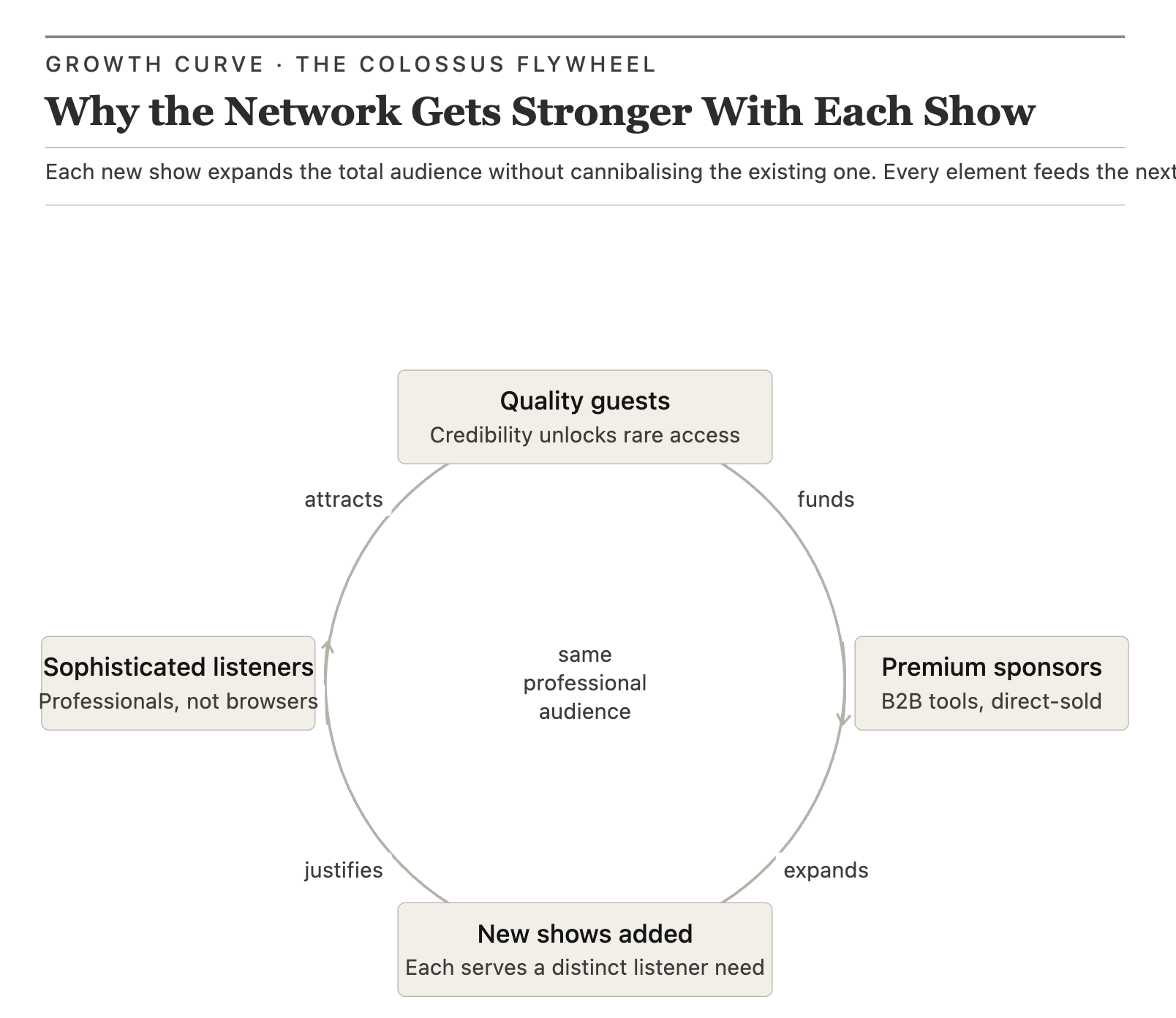
What made the show compound was the guest list. O'Shaughnessy had credibility with the kind of investors who had no particular reason to seek publicity. Because he was one of them, running money and thinking about markets, they trusted the conversation. The listeners who found the show were equally specific people with serious professional interest in investing and business who had already read the public record on guests and wanted the unscripted version. This is a different audience from someone who stumbled onto a business podcast from a search result. It is an audience that self-selects for sophistication, and whose employers are often willing to spend money to reach them.
The Network Decision
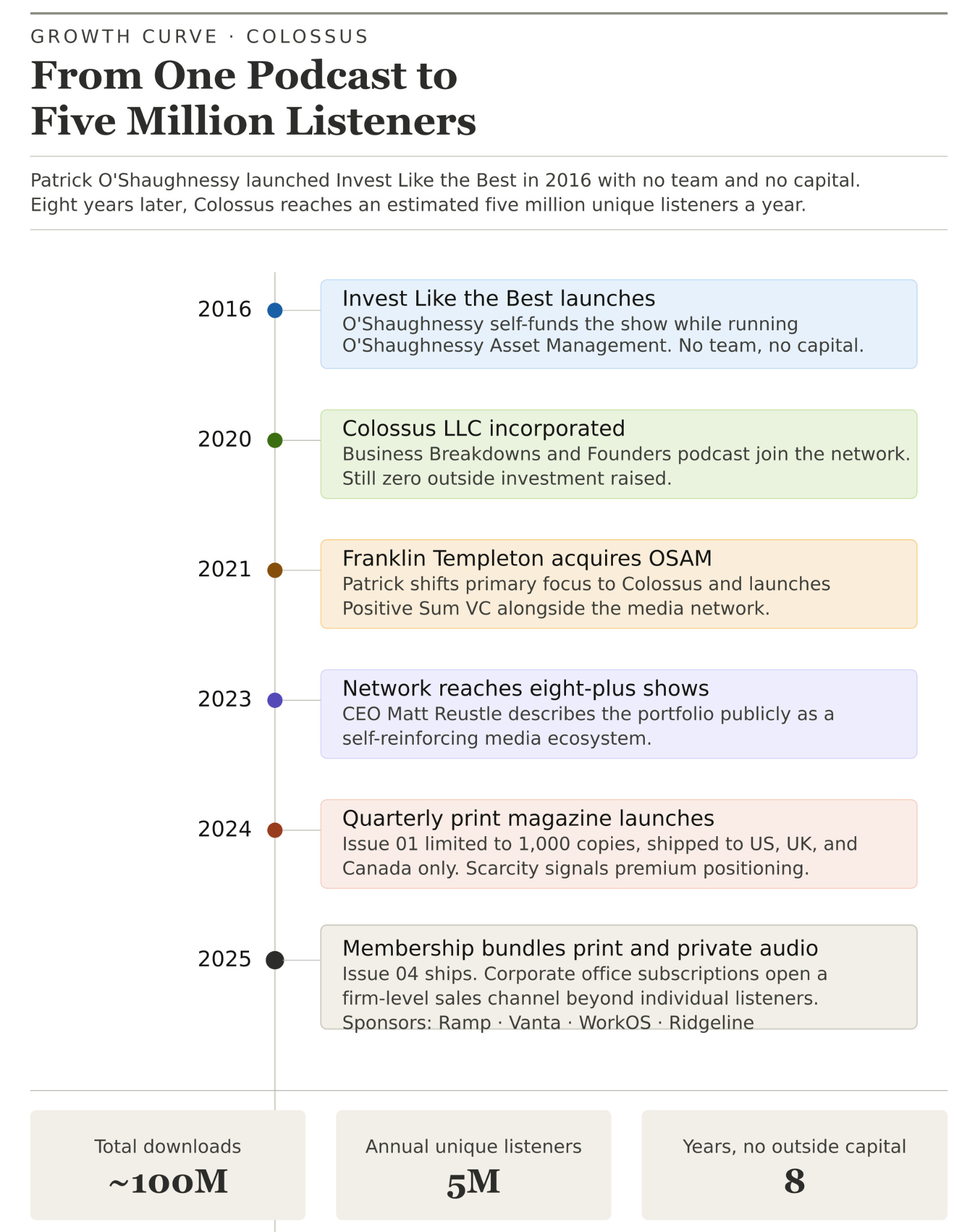
By 2020, Invest Like the Best had enough audience and revenue to sustain itself. O'Shaughnessy could have kept it as a profitable solo operation. Instead, he formalized Colossus, incorporated a proper entity, and began building a network around it.
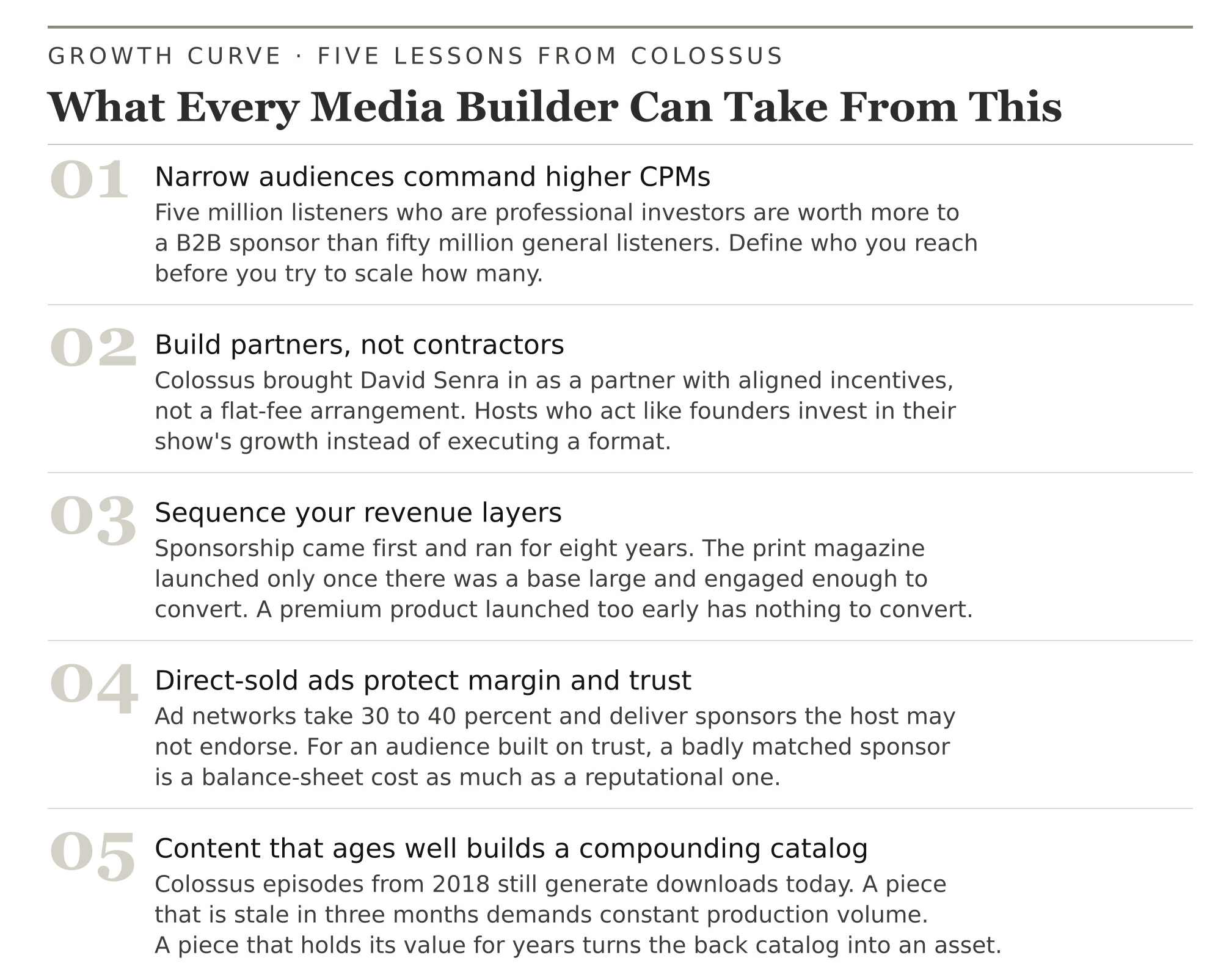
The first test of that model was bringing David Senra's Founders podcast into the network. Senra had been producing obsessively researched audio essays on founder biographies, reading one biography per episode, then distilling it into a 60- to 90-minute narrative for a small but intensely loyal audience. O'Shaughnessy recognized the quality before the scale. As he described his approach to talent identification, 'When I see undiscovered talent, it is my obligation to get to know them, to learn from them, to start introducing them to people.' He did not offer a licensing deal. He brought Senra in as a partner, giving the show access to Colossus's sponsorship infrastructure, production support, and cross-promotion with an already-established audience.
'You find these people that are on one of these scent trails and will stop at nothing to stay on the trail. It's infectious. The world feeds off the energy of people like David.' Patrick O'Shaughnessy, Compound Manual interview
The result of that partnership was cross-pollination that neither show could have generated alone. A Founders listener who had not heard of Invest Like the Best eventually found it, and vice versa. Matt Reustle, who joined from institutional investing (a decade at Goldman Sachs and then private credit) with no prior media background, was brought in as CEO to build the operational infrastructure around this model. As Reustle later acknowledged, it took him one to two years inside the business before he fully recognized he was running a media company.
Business Breakdowns followed the same pattern. A focus on deep, single-company analysis, hosted by Reustle himself, targeted at investors who want to understand how specific businesses work at a mechanical level. Each show served a distinct reader need within the same universe, investing and business, which meant every new show expanded the total audience without cannibalizing the existing one.
The tactical logic here is worth noting. Colossus did not add shows to create variety. It added shows that each independently justified a specific listener's time. A portfolio manager who finds Business Breakdowns for its company analysis is a different entry point than the generalist investor who starts with Invest Like the Best. But both listeners are the kind of professionals who read and listen compulsively, with their employer sponsoring the tools they use at work.
The Print Magazine
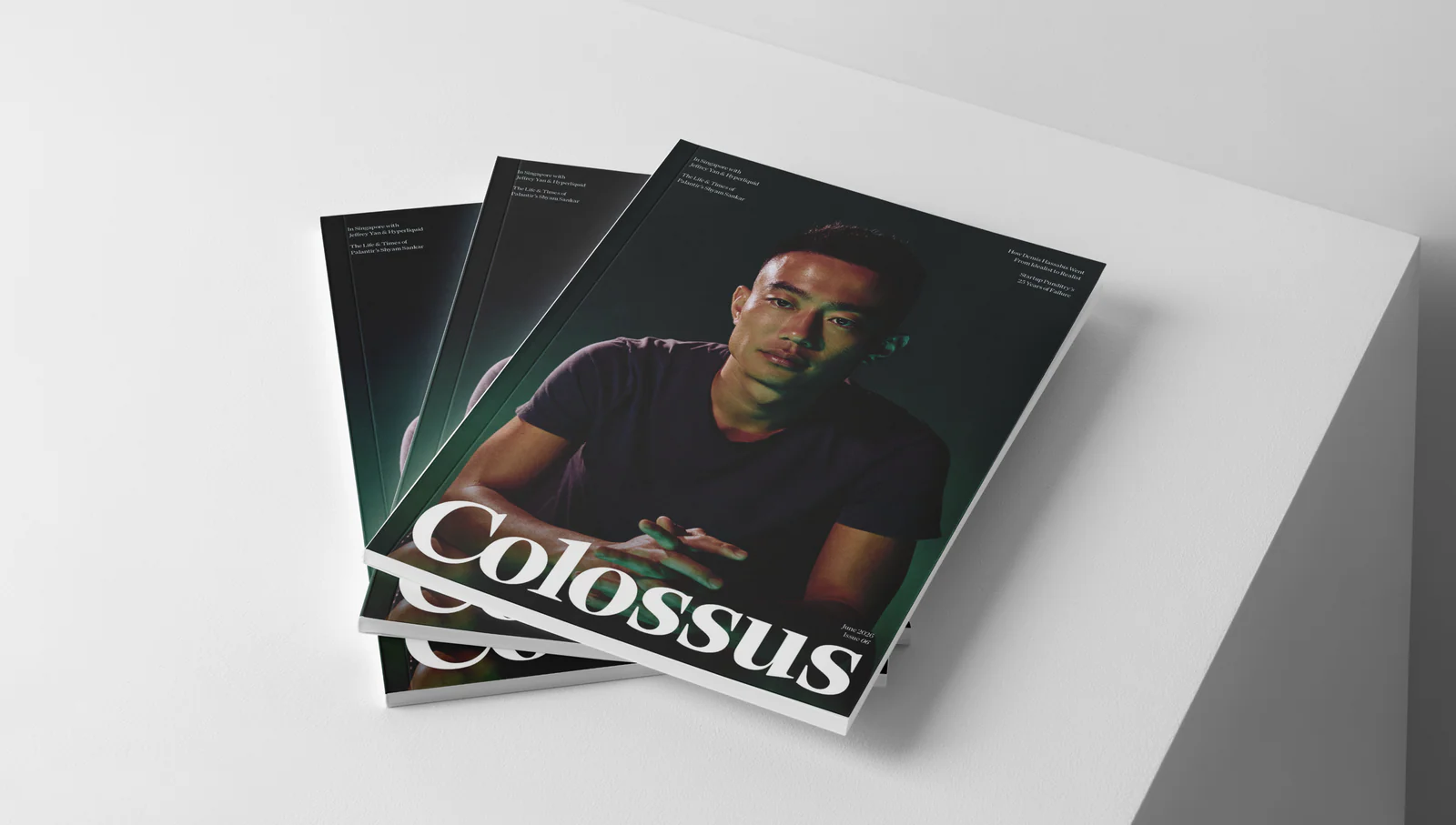
The Colossus magazine, launched in late 2024, looks like a nostalgia play from the outside. It is not. Issue 01 of the magazine was limited to 1,000 copies, shipped only to the US, UK, and Canada. That artificial scarcity signaled exclusivity to potential subscribers and let Colossus test fulfillment and printing at a manageable scale before expanding. By Issue 04, the magazine was featuring profiles of figures such as Thomas Peterffy, along with essays on AI in private markets and an Anduril deep dive. The editorial ambition matches that of The New Yorker in structure, long-form reporting, named subjects, and subject matter, making it a top-tier financial publication.
The membership model bundles the print edition with a private audio feed that includes exclusive interview content and early access to episodes. Listeners who would not pay for a podcast subscription may pay for a physical magazine that also unlocks additional audio. The print magazine functions as the premium product. The private audio is the digital benefit that justifies the ongoing subscription. Colossus also offers corporate multi-copy subscriptions for offices, which open a firm-level sale entirely separate from individual listeners. A CMO or research director buying five copies for their team is a different commercial relationship than a solo subscriber.
How the Sponsorship Economics Work
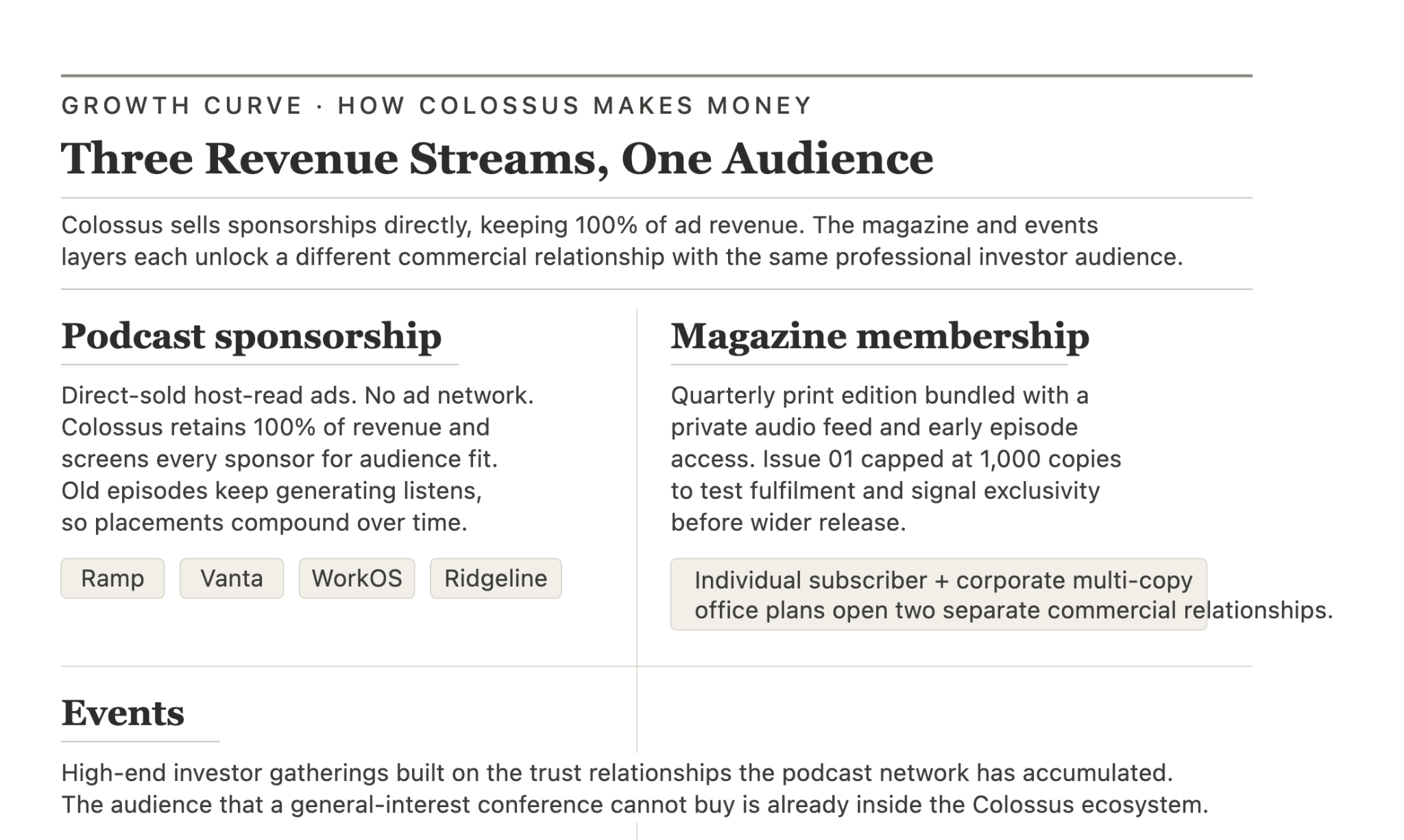
The primary revenue driver at Colossus is podcast advertising, and the reason sponsors pay what they pay comes down to audience composition rather than raw scale. Colossus reaches roughly five million unique listeners annually, a meaningful number, but not one that competes with general-interest podcast networks on volume. What it offers instead is a concentration of a professional investor and operator audience that is expensive to reach through any other channel.
The shows frequently rank in the top 50 of their respective categories (Business, Investing, Careers) on Apple Podcasts and Spotify. Crucially, Colossus has explicitly committed to content with long shelf-life, their sponsor kit notes that 'oldest episodes still receive significant activity and engagement.' This means sponsors are not just buying new-episode reach. They are buying placement in a catalog that continues to generate listens for years after publication, with no additional cost.
The sponsor roster directly reflects the audience profile. Ramp (corporate spend management), Vanta (compliance and security), WorkOS (enterprise software tooling), and Ridgeline (investment management software) are all tools that a professional investor, finance operator, or senior executive at a scaling company would plausibly evaluate. This is the result of deliberate curation. O'Shaughnessy has explicitly described the dynamic. He uses Ramp at both Colossus and Positive Sum, and he is backed by many of the same founders who appear as guests. The sponsor relationship is part of the same ecosystem as the guest relationship.
Colossus sells sponsorships directly, which keeps the revenue margin intact (podcast ad networks typically take 30 to 40 percent of revenue) and allows Colossus to maintain sponsor quality control. A poorly matched sponsor degrades the listener experience, and in a trust-based audience, that cost is real. Direct-sold ads also allow for better host-read integration.
The Audio Advantage and How Colossus Has Used It
O'Shaughnessy has a clear theory of audio that informs the entire network's design. Audio has an emotional resonance that the written word cannot match. It is easier to produce than a comparable-quality video, and it is easier to consume during commutes, at the gym, and while doing other things. The combination of low production friction, high convenience of consumption, and emotional depth makes it the most leveraged format for the kind of long-form intellectual conversation Colossus wants to have.
This explains why Colossus has explicitly chosen not to launch video versions of its podcasts, a decision CEO Reustle confirmed in the Simon Owens interview. Video would increase production cost, require studio infrastructure, and alter the conversational dynamic that makes the shows work. The intimacy of a long podcast interview, where a guest says something they would not say on camera, is part of the product. Protecting that format is an editorial decision.
The platform distribution strategy is also deliberate. Colossus publishes across Apple Podcasts, Spotify, and every major directory, but the canonical experience is the Colossus website, which hosts full transcripts, show notes, and episode archives. This web presence means each episode generates ongoing search traffic, so someone researching a specific guest or company will find the Colossus episode months or years after it aired.
-------
*** Every week, we pick apart how the world's best media brands got to where they are. This post is the long read. Growth Curve, our weekly newsletter, is the sharp version: same insight, shorter format, straight to your inbox. Subscribe free here. ***
Your newsletter won't build itself.


The 2000s Blog That Keeps Finding New Monetization Models
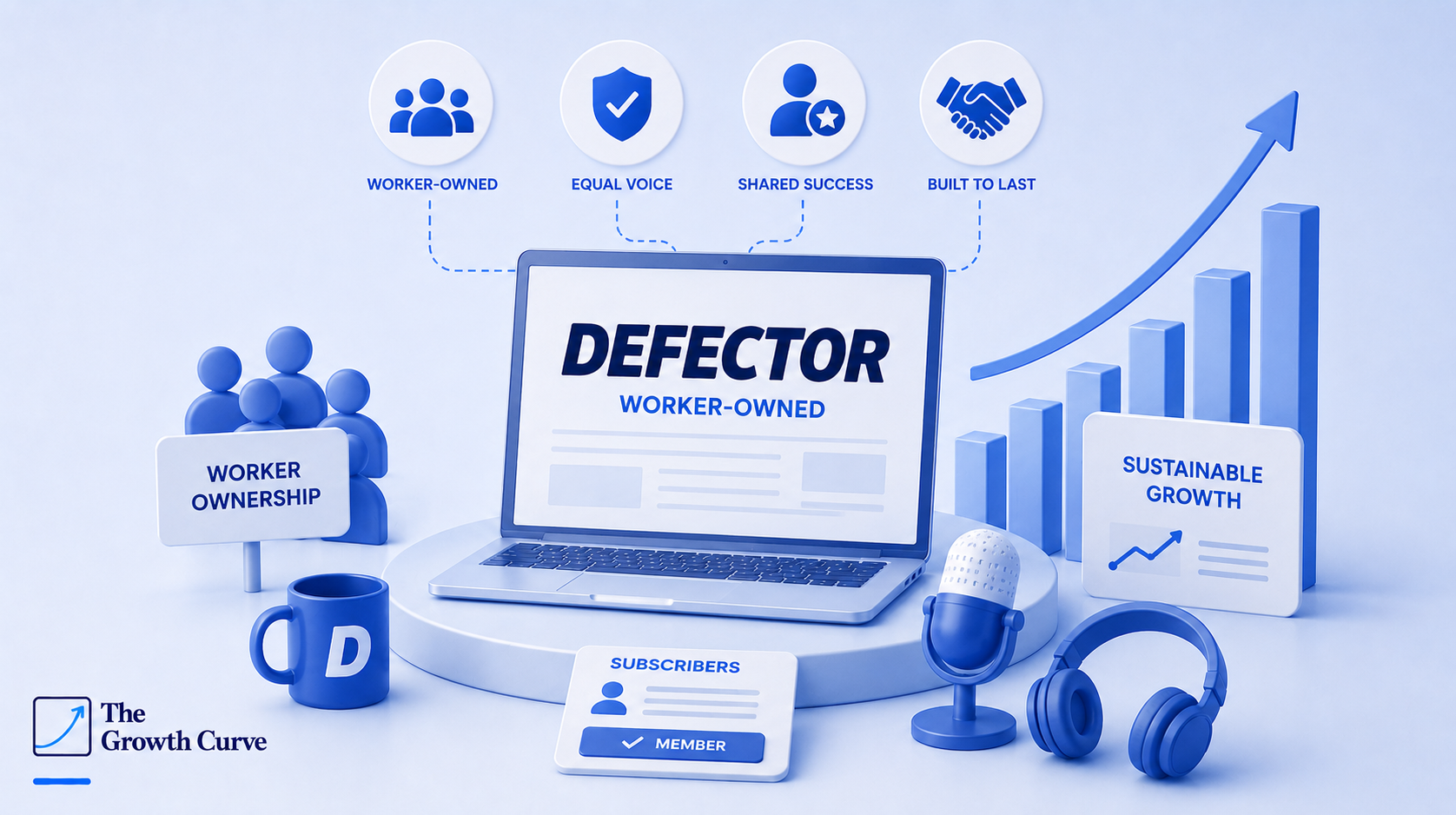
How Deadspin's Former Staff Built a Worker-Owned Media Company Without Outside Investors
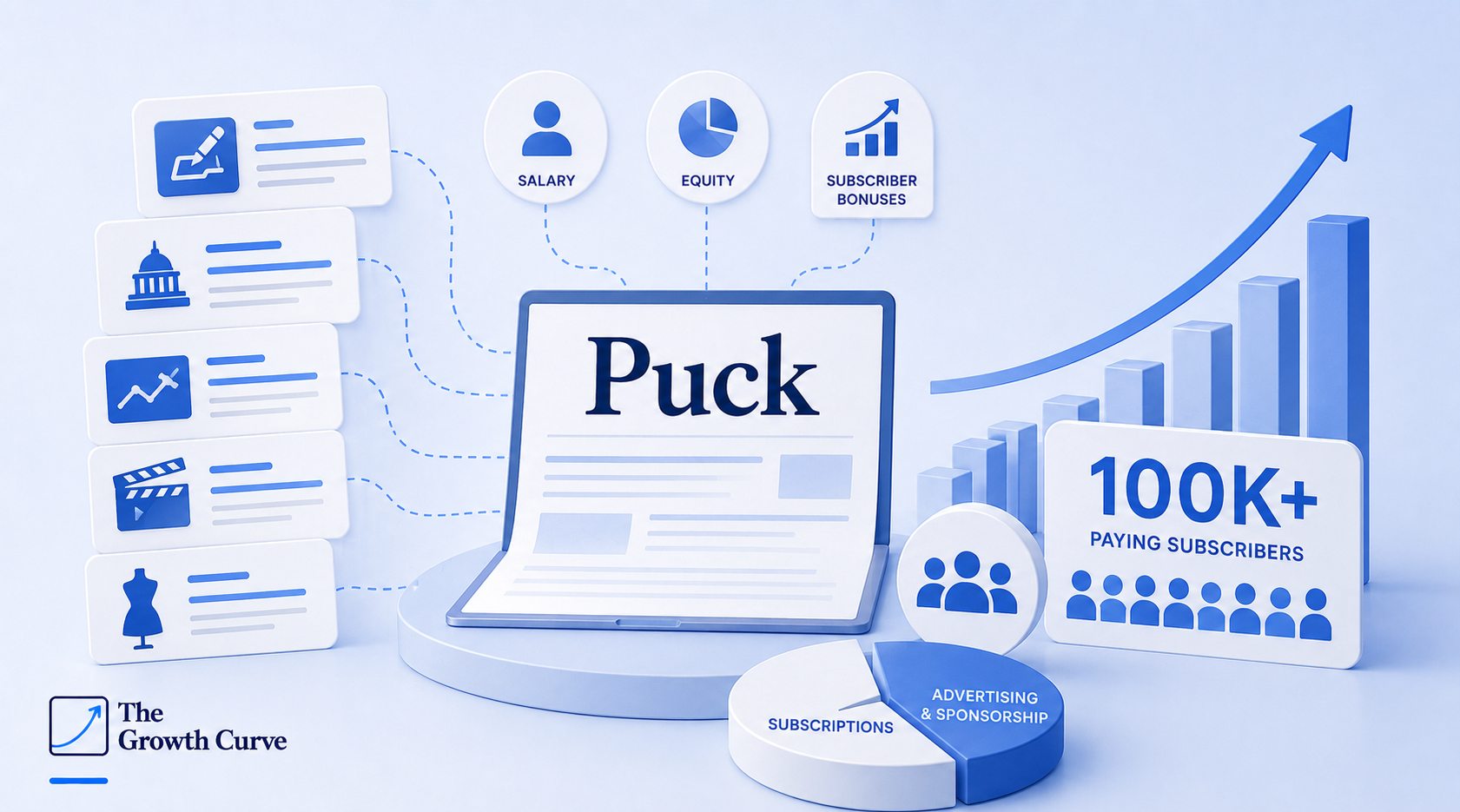
Inside Puck’s Bet on Writer Ownership