Newsletter Management Services: What's Actually Included (A Breakdown)
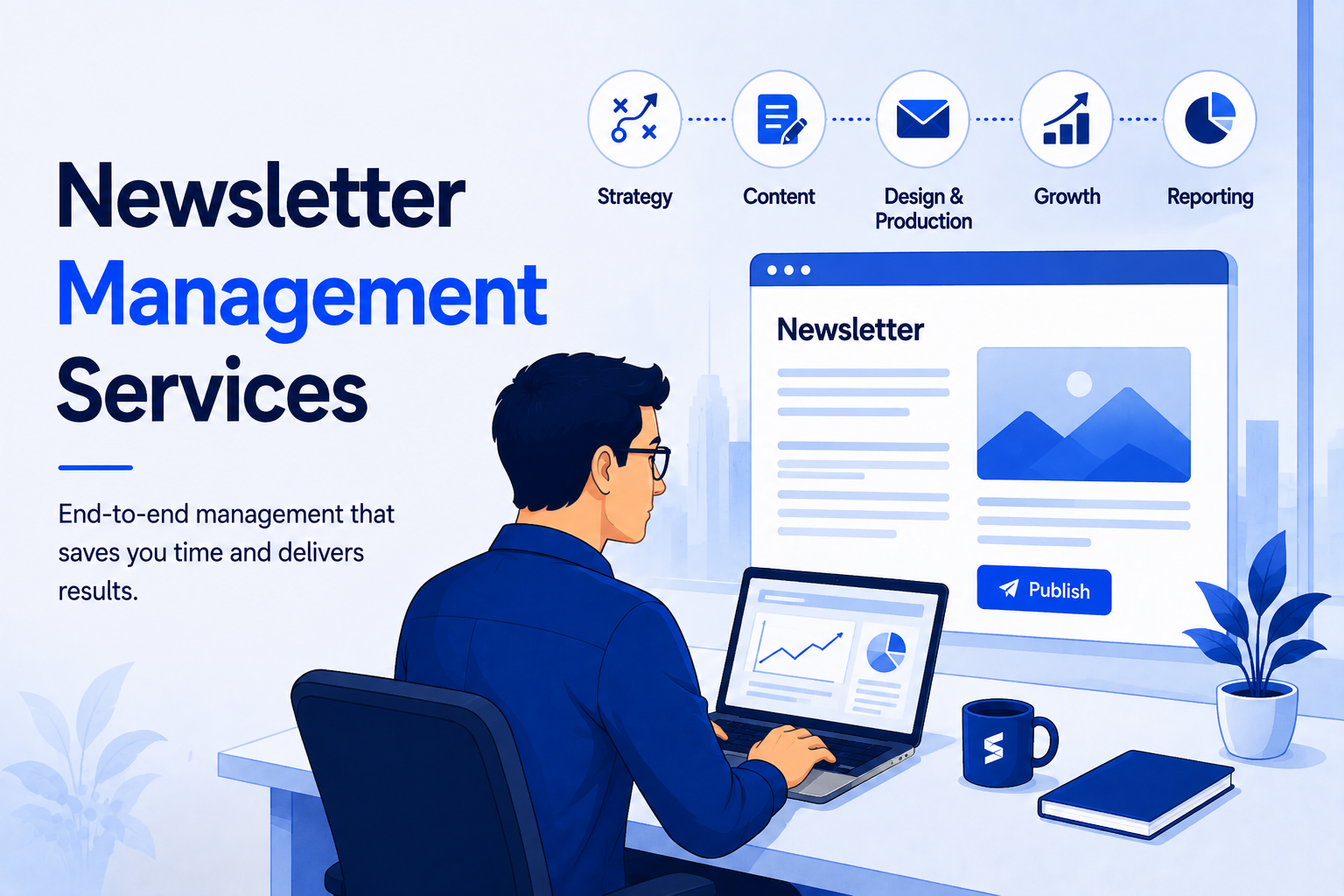

"Newsletter management" gets used to describe everything from full-service strategy and writing down to someone hitting send on a template once a week. The phrase alone tells you almost nothing about what you're actually buying.
Here's what real newsletter management services should include, and where the gaps usually show up.
Platform Administration
Someone has to own the platform itself: list hygiene, segmentation, tagging, integrations with your CRM. This is unglamorous work that most people never think about until it breaks, a bounce rate creeping up, a segment that's stopped syncing correctly, a tag that quietly stopped applying to new signups three months ago.
Deliverability Monitoring
This is the part that decides whether any of the other work matters. Domain authentication, spam complaint rates, inbox placement, all of it needs regular checking, not a one-time setup. We've put together a full deliverability audit checklist if you want to see everything that should be checked on an ongoing basis.
A newsletter with excellent content and broken deliverability still fails. Nobody reads an issue that lands in spam, no matter how good the writing is.
Send Scheduling and QA
Every issue needs a final check before it goes out: broken links, formatting errors, the wrong send list attached. This sounds basic until you've seen what happens when it's skipped, a newsletter sent to the wrong segment, or a send that goes out twice to the same list.
Point Wild came to us running a single newsletter with inconsistent sends and no real QA process. We rebuilt the operation into four separate newsletters serving different segments of their audience, now at 60,000 combined subscribers with a 44% open rate. Since June 2025, there hasn't been a single missed send.
That kind of consistency makes everything else possible. A brilliant issue that goes out late, or to the wrong list, does more damage than a mediocre one sent on time to the right people.
How Often Each Piece Should Actually Happen
Platform administration is a weekly check at minimum: list hygiene, tag accuracy, a quick look at bounce and unsubscribe rates. Deliverability is worth a monthly deep review even when nothing looks wrong, since inbox placement can degrade slowly, well before it shows up as an obvious problem. Send QA happens every single issue, no exceptions, because it's the one step where a five-minute skip creates a visible mistake in front of the entire list. Reporting works best on a monthly cadence tied to real business metrics, with a lighter weekly pulse check on the numbers that move fastest.
Ask a prospective agency to walk through this cadence specifically. A vague "we monitor everything closely" usually means none of it is actually scheduled.
Reporting That Actually Means Something
Real management services include regular reporting tied to what the business actually cares about: replies, pipeline influence, list growth against target, alongside opens and clicks. A monthly report that's just a screenshot of the platform's built-in dashboard is forwarding, not management.
Ask what a report actually looks like before you sign. If nobody can show you a sample, assume the reporting will be thin once you're a client.
Ongoing Optimization
Subject lines get tested. Send times get adjusted based on actual open data. Segments get refined as the list grows. None of this is a one-time setup task, it's continuous work that compounds over months, and it's easy to skip once an agency is comfortable that the numbers are "good enough."
What Happens When Management Is an Afterthought
The pattern is predictable. A newsletter launches well, the first few issues get real attention, and the numbers look promising. Then the account settles into a routine where the writing still happens on schedule but nobody's actively watching deliverability, nobody's testing subject lines anymore, and reporting quietly becomes an emailed PDF nobody reads closely.
Six months later, the open rate has drifted down 10 or 15 points and nobody can say exactly when it started or why. That's the cost of treating management as something that happens automatically once the newsletter is set up, instead of as an ongoing discipline with its own weekly attention.
Where the Gaps Usually Are
Most providers who call themselves "newsletter management" cover platform administration and send scheduling, and stop there. Deliverability monitoring and real reporting are the two areas most likely to get skipped, and they're also the two that cause the most damage when they're missing.
Before signing with anyone, ask specifically whether deliverability gets monitored weekly or only when something visibly breaks.
Your newsletter won't build itself.


How Much Does a B2B Newsletter Agency Cost?
Newsletter Management Services: What's Actually Included (A Breakdown)

How to Choose a B2B Newsletter Agency: The Evaluation Criteria That Actually Matter