Newsletter vs LinkedIn: Where Should B2B Companies Focus?


LinkedIn followers don’t belong to you.
That’s not a criticism of LinkedIn. It’s how the platform works.
LinkedIn can change its algorithm tomorrow, reduce organic reach next quarter, or suspend your account with limited recourse. Your 8,000 followers? LinkedIn decides how many of them see each post.
A newsletter subscriber is different.
You have their email address. You can reach them on Tuesday morning without asking LinkedIn’s permission. No feed. No algorithm. No competing posts in the same scroll.
That’s the core of this debate.
And it has a clear answer.
The Case for LinkedIn
LinkedIn is where B2B buyers spend time.
Over 900 million users. Decision-makers check it between meetings, during lunch, and on the commute home. Organic content still works there in ways it no longer does on other platforms.
For B2B companies, LinkedIn offers real value:
- Discovery. People who don’t know you can find your content through shares and comments.
- Speed. A strong post can reach thousands within 24 hours.
- Social proof. Follower counts and active comment threads signal credibility.
- Outbound warmth. Prospects who have seen your content are easier to convert than those who haven’t.
LinkedIn is a legitimate channel.
The question isn’t whether to use it. The question is whether to treat it as your primary channel.
On that question, the answer is no.
The Problem With Building on LinkedIn
LinkedIn is borrowed media.
You’re building on a platform you don’t own. That means you operate under its rules.
Here’s what that looks like in practice.
Reach Is Limited and Shrinking
Average organic reach on LinkedIn company pages often falls between 5 and 10 percent of followers per post.
If you’ve built a 5,000-follower page, roughly 250 to 500 people see each post.
Many marketers have documented consistent declines in company page reach as LinkedIn pushes paid promotion. Your reach may be dropping even if you don’t notice it.
The Algorithm Changes Without Notice
What worked in 2022 may not work in 2025. Companies that built distribution around specific LinkedIn formats have had to rebuild from scratch more than once.
You Can’t Export Your Audience
Your LinkedIn followers are LinkedIn’s data. If your account is restricted or policies change, you have no list to show for your work. Everything stays inside their system.
Engagement Rarely Moves Deals
Most LinkedIn engagement is passive.
Someone scrolls past your post and maybe leaves a like. That interaction rarely moves a prospect from awareness to conversation without multiple additional touchpoints.
Posts are consumed and forgotten.
None of this makes LinkedIn worthless.
It makes relying on it as your primary channel a mistake.
What a Newsletter Gives You Instead
When someone subscribes to your newsletter, their email address sits in your CRM.
You can export it. Move it to another platform. Use it for targeted outreach. Reach them directly for as long as they stay subscribed.
That changes the relationship.
Access Is Deeper
A well-run B2B newsletter earns 35 to 50 percent open rates.
A LinkedIn company page with 1,000 followers may reach 50 to 100 people per post.
The same 1,000 subscribers on an email list?
350 to 500 opens per send.
That’s not a marginal difference. It’s a different category of access.
Depth Converts Where Scroll Doesn’t
LinkedIn rewards short, scannable content.
Newsletters can explore a topic in 600 to 900 words with reasoning, examples, and recommendations. That depth builds trust. Trust moves someone to book a call.
Subscribers Opt In
Subscribing requires intention.
Clicking Follow on a company page while browsing does not.
Subscribers start with a higher baseline of intent.
The List Compounds
Every subscriber stays until they choose to leave.
LinkedIn reach resets with every algorithm shift. A newsletter list built over three years is a genuine asset. A LinkedIn following of the same age is contingent on platform goodwill.
Working with more than 50 B2B companies, the pattern is consistent. Companies that treat their newsletter as their primary channel outperform those relying on LinkedIn alone.
Newsletter subscribers convert to conversations.
LinkedIn followers mostly don’t.
The Numbers Side by Side
LinkedIn company page, organic
- Post reach: 5 to 10 percent of followers
- Engagement rate: 0.35 to 0.5 percent
- Click-through rate: 0.5 to 1 percent
- Audience portability: none
B2B newsletter
- Open rate: 35 to 50 percent
- Click-through rate: 3 to 7 percent
- Reply rate on engaged lists: 1 to 3 percent
- Audience portability: full export available
A newsletter list of 1,000 subscribers generates 350 to 500 opens per send.
A LinkedIn page with 1,000 followers generates 50 to 100 views per post.
Same audience size. Dramatically different access.
And the email list doesn’t shrink when an algorithm changes.
When LinkedIn Still Wins
LinkedIn is the better channel in two scenarios.
Top-of-Funnel Discovery
Nobody subscribes to a newsletter they’ve never heard of.
LinkedIn helps you reach people before they know you. Strong posts can drive traffic to your newsletter opt-in page.
In this model, LinkedIn serves the newsletter. It’s the acquisition channel, not the destination.
Founder and Executive Personal Brand
Individual founder posts significantly outperform company page posts.
If your CEO has sharp opinions on what’s broken in your industry, LinkedIn is the right stage.
Personal posts build credibility. That credibility makes people want to subscribe.
The goal remains the same: convert followers into email subscribers.
Where Most B2B Companies Go Wrong
The most common pattern looks like this:
- LinkedIn posts
- Sporadic email blasts
- An occasionally updated blog
Nothing compounds because nothing is prioritized.
Three years of effort produces a modest LinkedIn following that doesn’t convert and an email list that hasn’t grown.
The better approach is choosing a primary channel and making everything else support it.
If newsletters are your primary channel, the structure looks like this:
- LinkedIn posts drive subscriptions
- Blog posts expand newsletter topics for search
- Sales references the newsletter in outreach
- Reply threads provide language to use in content and sales
Everything feeds the list.
The list feeds the pipeline.
The Honest Answer
For a B2B company choosing where to focus, the order is simple:
Newsletter first. LinkedIn second.
LinkedIn keeps you discoverable.
Your newsletter builds the relationship that converts to revenue.
Building only on LinkedIn is like renting retail space in a mall you don’t own. The rent can change. The foot traffic can shift. The rules can update.
You have no say.
The companies doing this well run newsletters with 1,000 to 5,000 engaged subscribers and use LinkedIn to grow that list each week.
The companies stuck are treating LinkedIn as the end goal and wondering why follower count doesn’t translate to revenue.
The audience you own will always be worth more than the audience you borrow.
What to Do This Week
If you’re starting from scratch:
- Launch a newsletter. Weekly cadence. Clear ICP. Focused topic.
- Post on LinkedIn to drive subscribers. End each post with a soft CTA.
- Measure open rate, reply rate, and pipeline influence. Not follower count.
- Keep LinkedIn as acquisition. Keep the newsletter as the asset.
If you already have a newsletter but treat it as secondary, fix that before adding more content.
You don’t need a large list to start.
You need a consistent one.
Ready to Stop Renting Your Audience?
If you want help building a B2B newsletter that converts, book a free strategy call with Spacebar Studios.
Your newsletter won't build itself.

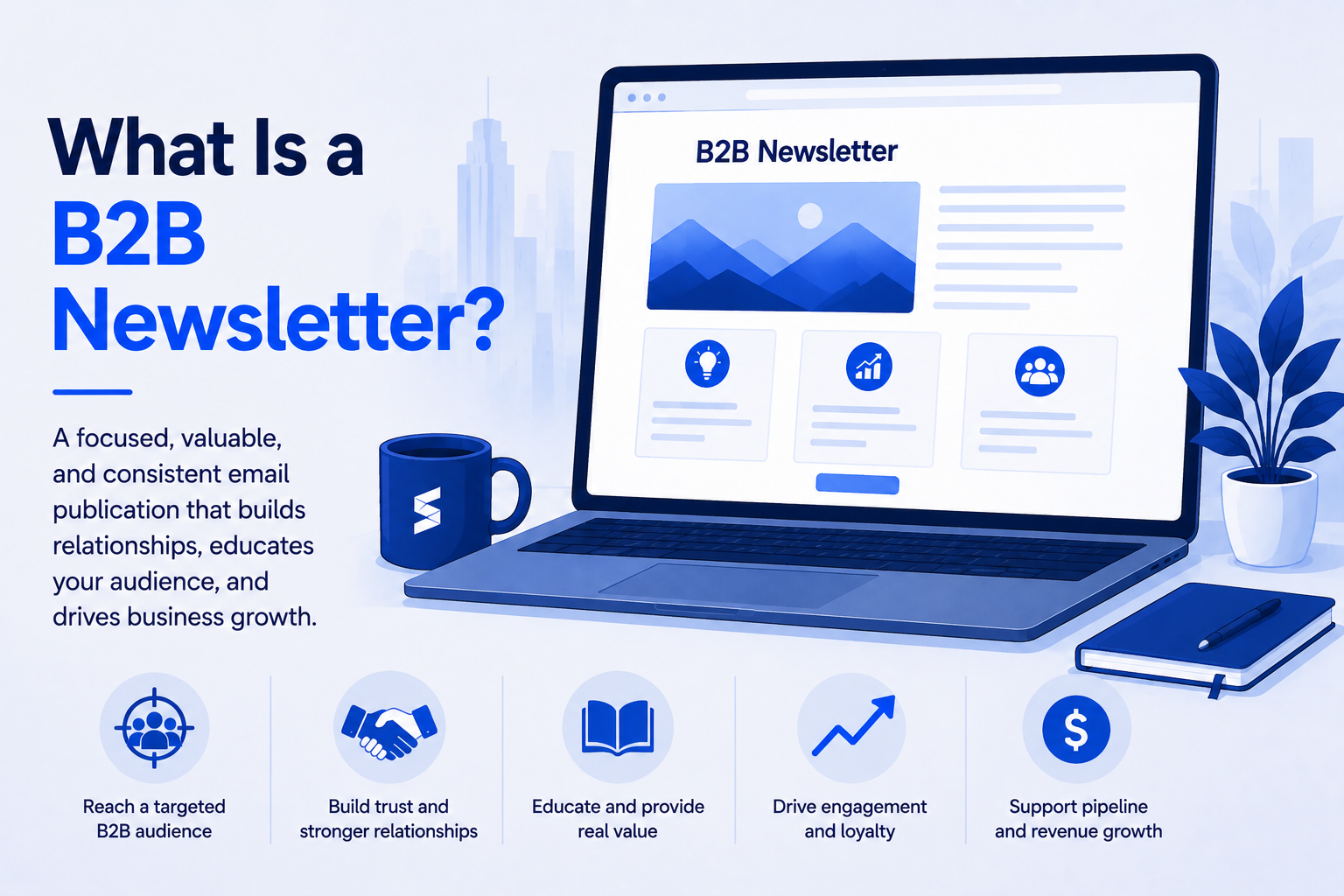
What Is a B2B Newsletter? (And How It's Different From a Consumer One)
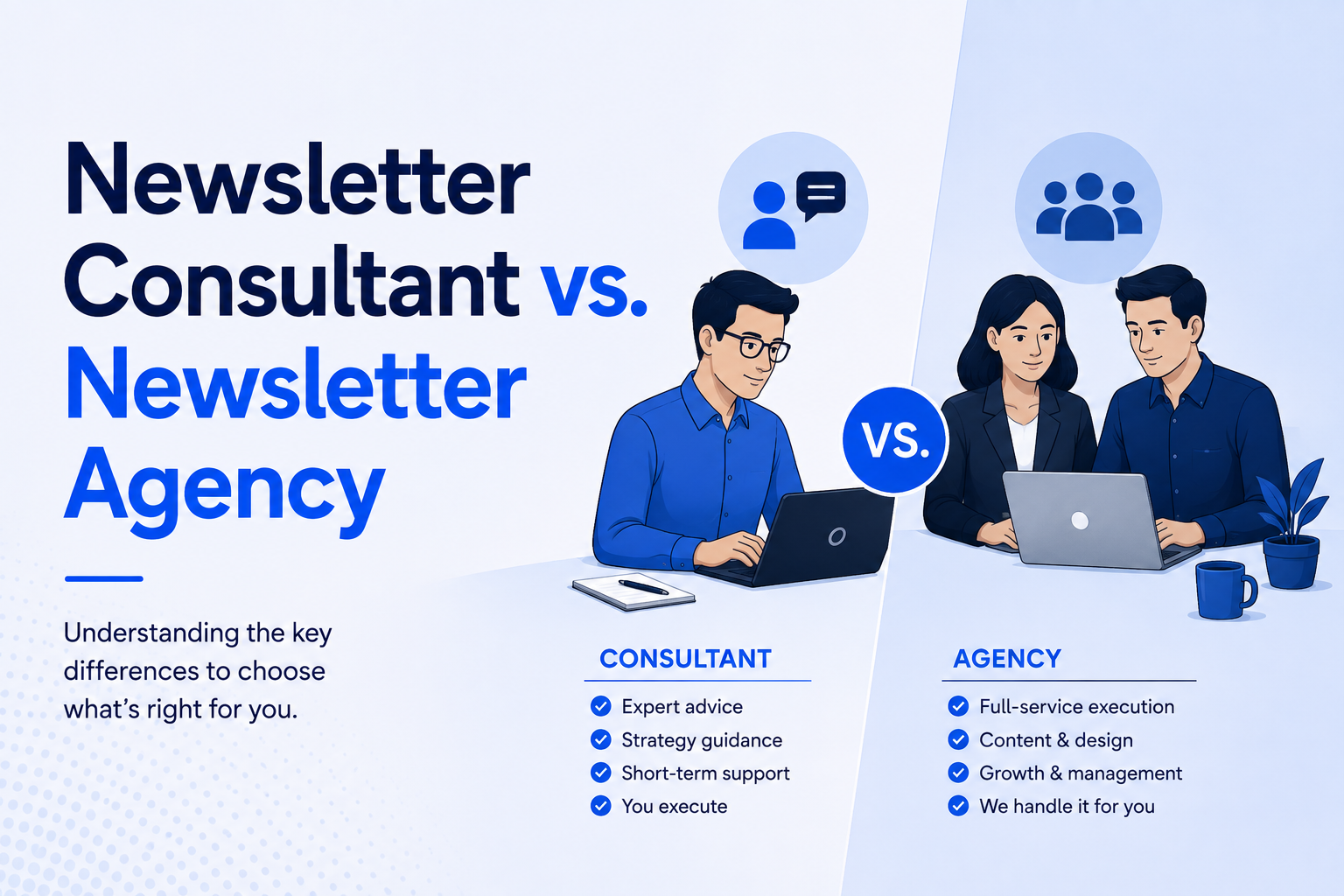
Newsletter Consultant vs. Newsletter Agency: Which One Actually Moves the Needle?
What Is a B2B Newsletter Agency (And What They Actually Do)