What Audience Development Actually Means for a B2B Newsletter


Most newsletter agencies will write your content. Fewer will actually grow your list. Audience development is the part of the job that takes real, sustained effort, and it's the part that gets quietly dropped once a contract is signed.
What Audience Development Actually Involves
It's not a single tactic. It's a mix of channels working together, tuned specifically to your ICP instead of a general audience.
LinkedIn. Organic posts, from the founder or a designated voice, that point back to the newsletter. We've written about how this works in more detail here. Done well, it's one of the most effective channels for B2B specifically, because your buyers are already spending time there and a strong post can put your name in front of hundreds of the right people for free.
Lead magnets. A gated resource, a template, a benchmark report, that trades real value for a subscription. This works best when the magnet is specific to the same audience the newsletter serves, not a generic download meant to capture anyone who lands on the page. A benchmark report aimed at your exact ICP will convert at a fraction of the traffic a generic one needs, with subscribers far more likely to stay engaged.
Referral programs. Existing subscribers sharing the newsletter with colleagues, usually with some kind of incentive attached. Small in volume but high in quality, since referred subscribers already trust the person who sent it.
Cross-promotion. Trading placements with other newsletters that share your audience but aren't direct competitors. Slower to set up, faster to compound once a few relationships are in place. A single well-matched swap can outperform months of paid acquisition, because the subscribers arriving already trust the newsletter that recommended you.
How Much Effort Each Channel Actually Takes
LinkedIn takes the most ongoing time: a real cadence means several posts a week, plus engaging with comments, which is closer to a part-time job than a weekly task. Lead magnets take a concentrated burst of upfront work to build, then run mostly on their own once the landing page and the promotion around it are in place. Referral programs need a one-time setup and then a periodic nudge to subscribers reminding them the option exists. Cross-promotion takes the least raw effort but the most relationship-building, since it depends on finding other newsletters worth partnering with in the first place.
Knowing that breakdown matters when you're evaluating an agency's growth plan. A plan built entirely around LinkedIn without the staffing to actually sustain a real posting cadence usually fizzles within a couple of months.
Why Agencies Skip This Part
Growth work is harder to bill for cleanly. Writing an issue has a clear deliverable: the issue goes out, the client sees it. Growth work is ongoing, harder to point to in a single deliverable, and the results take months to show up.
So a lot of agencies quietly narrow their scope to content only, and let audience growth become the client's problem to solve on their own. The newsletter itself might read well, issue after issue, while the subscriber count sits flat for a year.
What Good Audience Development Actually Looks Like
Fractional Source sells fractional sourcing services to state and local government agencies. There was no obvious existing channel to reach that audience beyond cold outreach.
We built the list from zero with a mix of targeted LinkedIn content and direct outreach to the exact job titles that made up the ICP. Twelve months in: 25,000 subscribers, a 45% open rate, and multiple deals sourced directly from newsletter replies.
None of that happens by publishing good content and waiting. It happens because growth was treated as its own workstream with its own weekly effort, planned and tracked with the same attention as the writing.
What to Ask Before You Hire
Ask any agency exactly how they plan to grow your list in the first ninety days. A specific channel mix and a rough subscriber target is a good answer. "We focus on quality content and let growth happen organically" is a way of avoiding the question, not answering it.
It's also worth asking who owns growth day to day. If the answer is "the same person writing the newsletter, whenever they have time," that's usually a sign growth will lose out to the writing deadline most weeks.
One more useful question: ask to see growth numbers from a comparable client, not just the flagship case study every agency leads with. A single great result doesn't tell you whether growth work is a consistent discipline or a one-time stroke of luck on one account.
Your newsletter won't build itself.

What Audience Development Actually Means for a B2B Newsletter
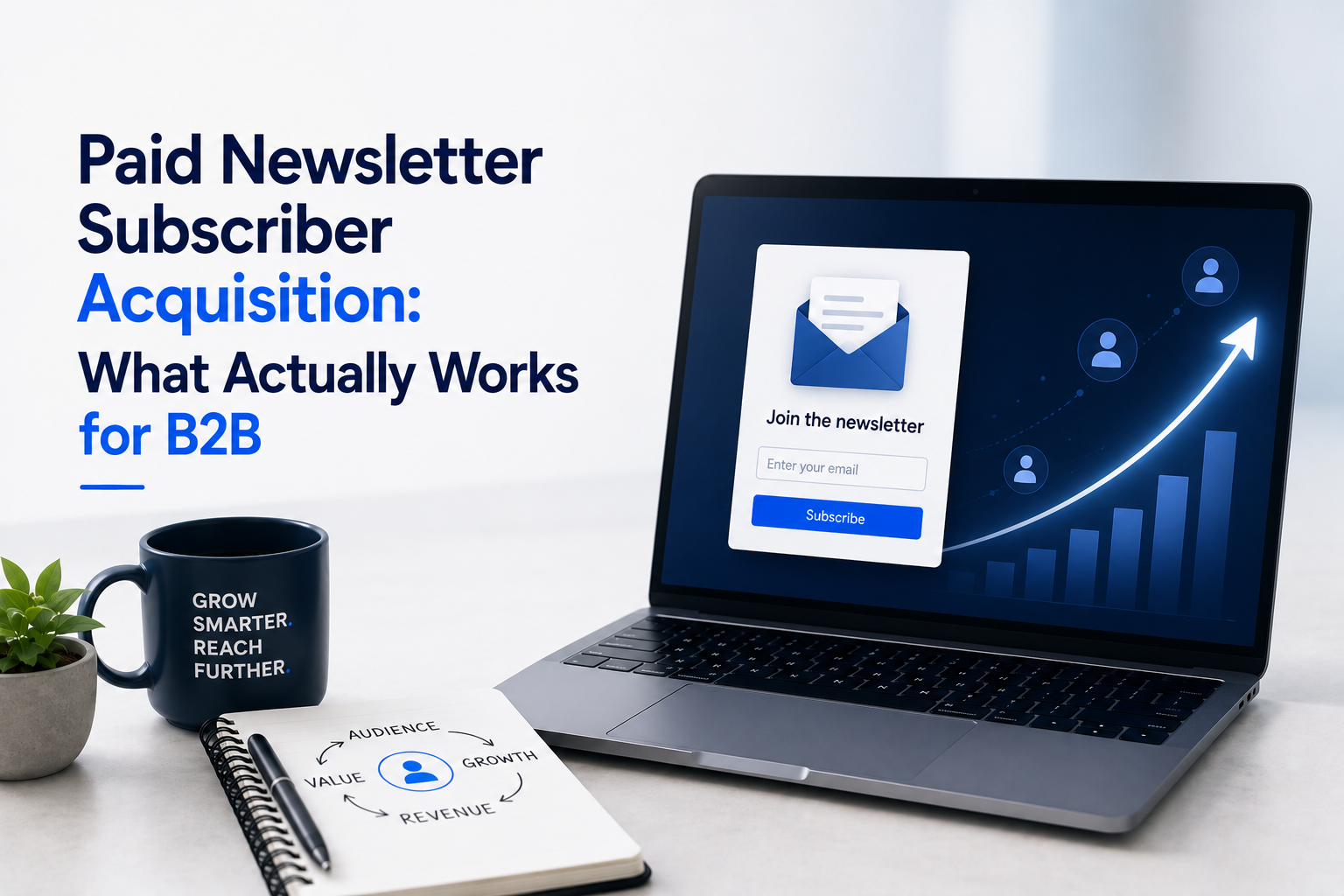
Paid Newsletter Subscriber Acquisition: What Actually Works for B2B
Newsletter Referral Programs for B2B Companies: Do They Actually Work?
