How Morning Brew Built 8 Professional Audiences From One Consumer List

*** Every week, we pick apart how the world's best media brands got to where they are. This post is the long read. Growth Curve, our weekly newsletter, is the sharp version: same insight, shorter format, straight to your inbox. Subscribe free here. ***
In 2015, Alex Lieberman and Austin Rief were students at the University of Michigan when they started emailing a short business news summary to classmates. The early version was a PDF attached to an email, titled Market Corner, with clip art of a bull and a bear on the cover. Lieberman had been writing market recaps for a campus finance club, and the two believed they could package business news for people their own age in a way the existing outlets did not. They raised $750,000 in 2017, barely spent it, and never raised money again. The daily newsletter funded everything.
By 2020, the flagship had grown into a profitable business built almost entirely on advertising. In October of that year, Insider acquired a majority stake in a deal that valued the company at $75 million, at a point when Morning Brew was generating around $20 million in annual revenue. Much of the list was built through a referral program that rewarded readers for bringing in friends, which helped the flagship scale at a low cost per acquisition. The newsletter continued to grow after the sale. It now reaches more than 4 million free subscribers, has open rates above 50%, and reportedly generates more than $70 million a year.
The Flagship Sold to a Broad Audience
Morning Brew's early model was straightforward. The daily newsletter covered business, finance, and the economy in a light, conversational voice aimed at working millennials. Advertisers paid to reach that audience, priced on the number of people who opened each send. The larger the list grew, the more the company could charge. A reader could be a marketing manager, a software engineer, a nurse, or a finance analyst, and the same daily brief served all of them. That breadth was good for scale. It was harder to sell to an advertiser who wanted to reach one specific kind of professional.
The Consumer List Became a Source of Professionals
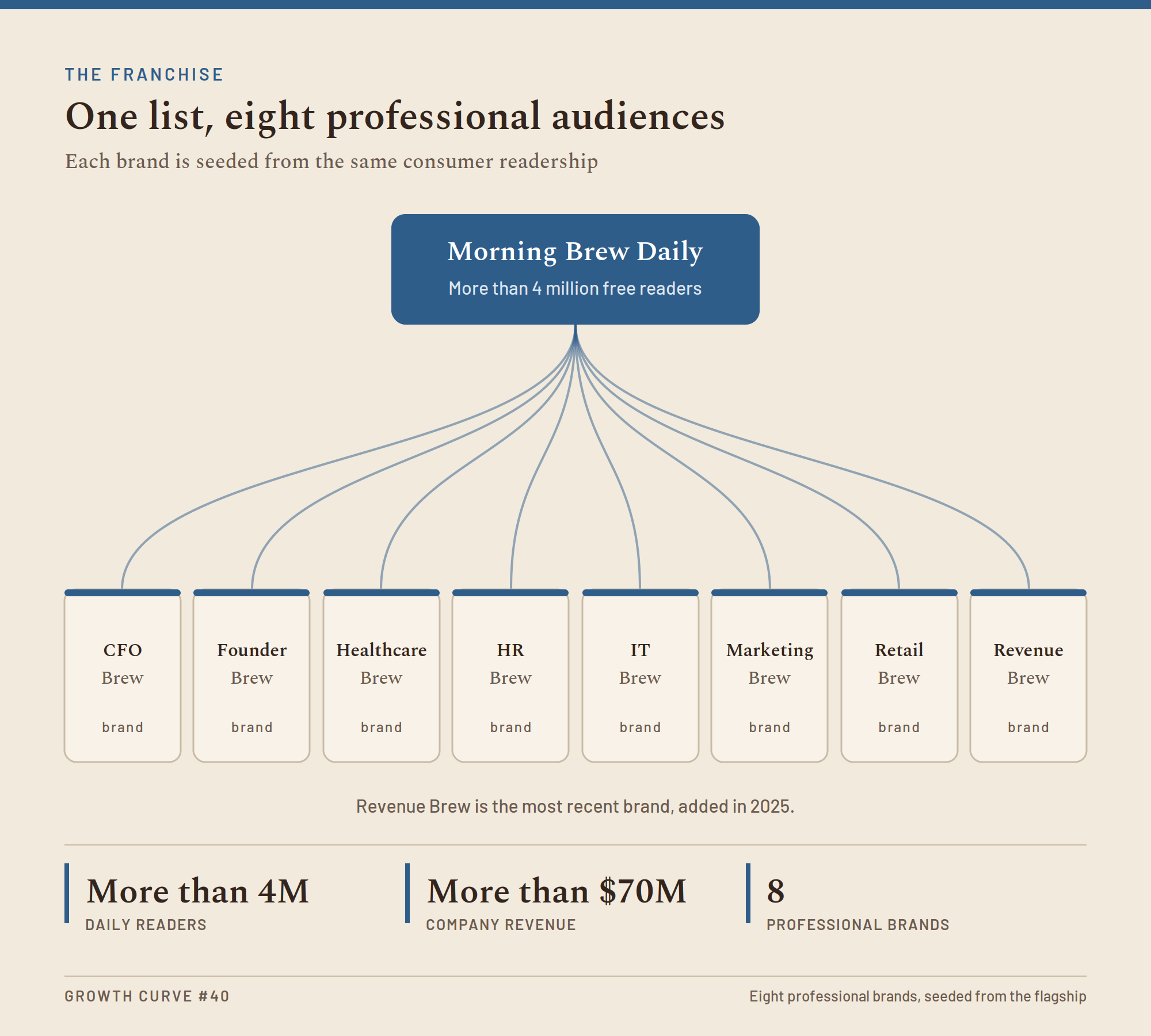
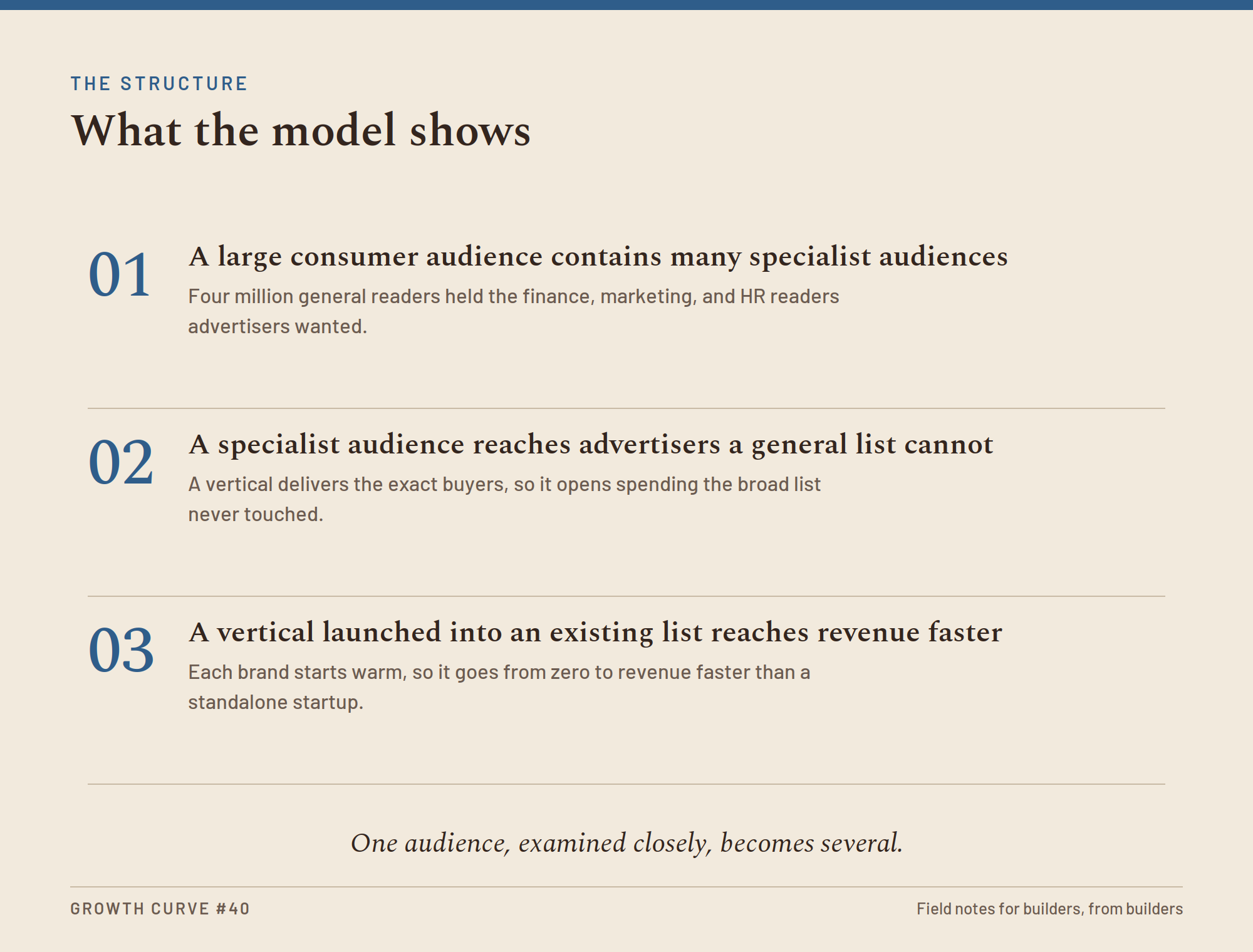
The insight that reshaped the business was that the flagship audience already contained thousands of specialists. Within 4 million general readers were the finance people, the marketers, the HR leaders, and the technologists that advertisers most wanted to reach. Morning Brew began identifying readers within its own list and routing them to newsletters tailored to their work. The company calls this cross-pollination. A subscriber who reads the daily brew, listens to the podcasts, and shows signs of working in finance can be pointed toward CFO Brew. The same reader who was worth a general advertising impression becomes worth far more once identified as a finance executive and moved into a finance product. The data and tooling to do this across millions of readers took years to build, and the company has pointed to that infrastructure as the reason it can segment the list the way it does.
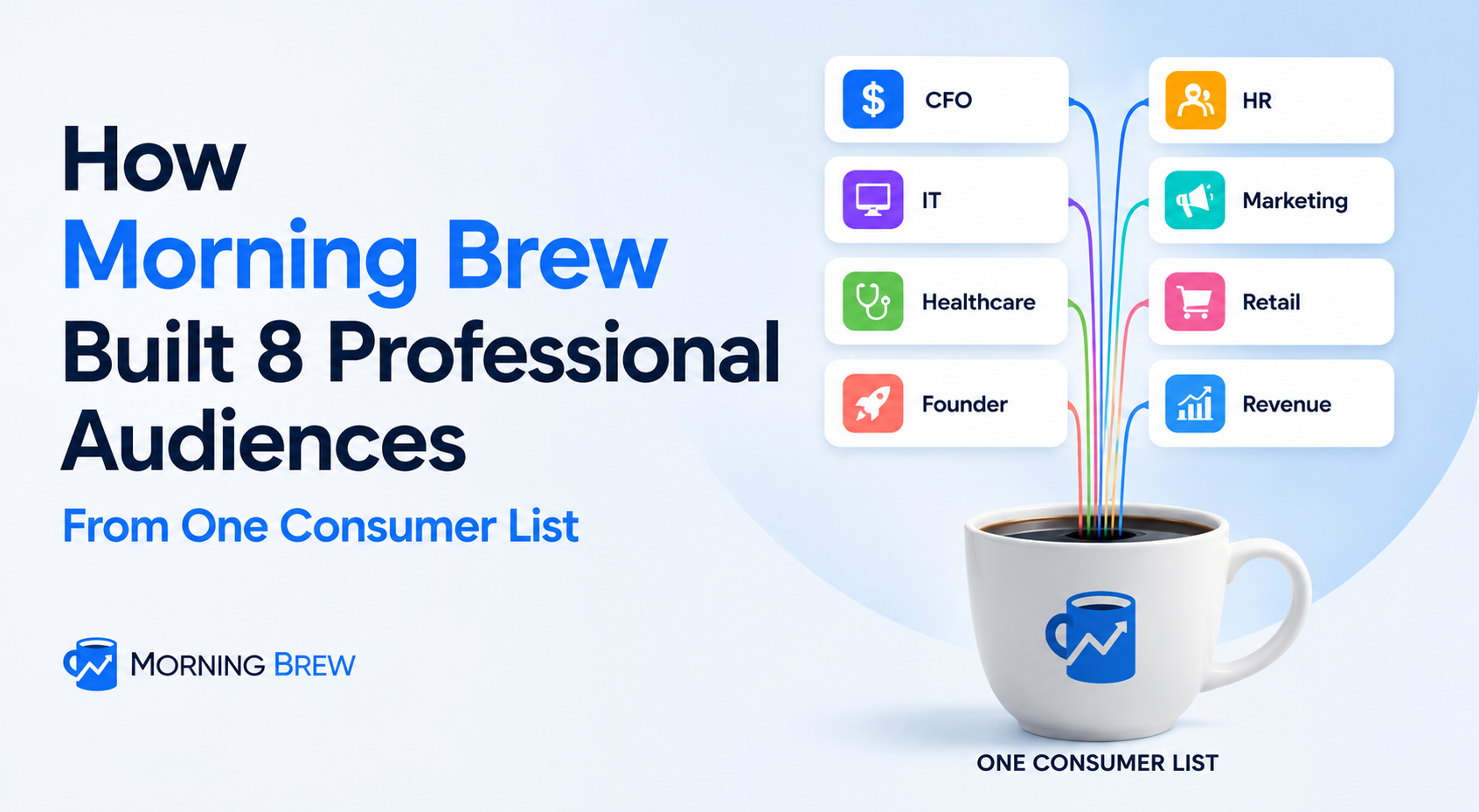
This is the mechanism the whole B2B business runs on. Launching a professional newsletter from scratch usually means starting an audience from zero. Morning Brew started each vertical with a large, warm pool of readers who already knew the brand and its style. CFO Brew launched in 2022 and is aimed at readers in corporate and strategic finance. Around it sit 7 more professional titles covering marketing, retail, HR, IT, healthcare, technology, and founders. The technology title now goes by Tech Brew, having launched as Emerging Tech Brew. Together, the 8 form a franchise of separate audiences, each seeded from the same consumer list.
Each Vertical Carried Its Own Advertisers
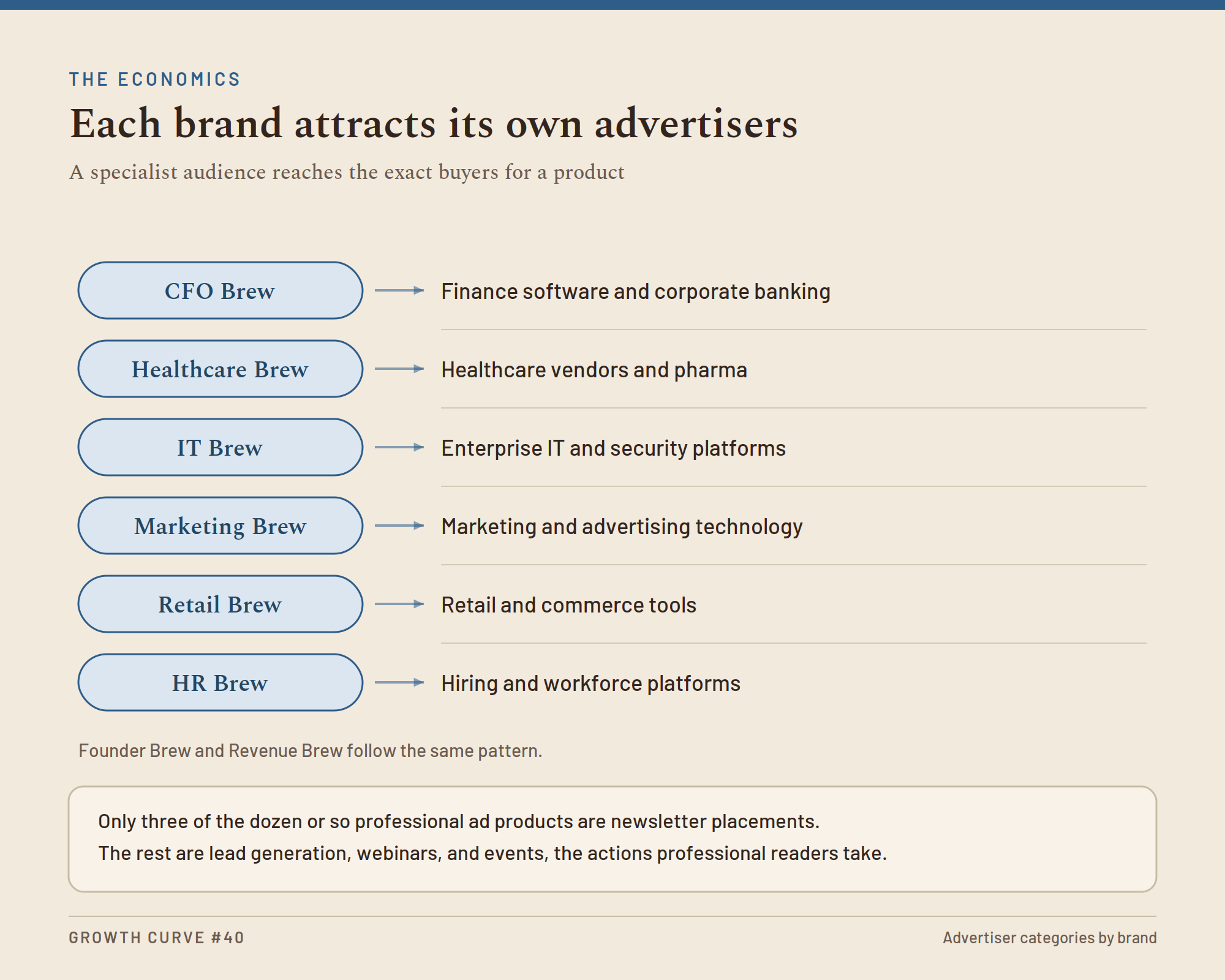
The reason to build 8 audiences comes down to who pays for each. The daily flagship sells against a general business readership. A finance software company, a healthcare vendor, or an enterprise IT platform wants a room full of the exact buyers for its product, and it pays accordingly. A specialist newsletter delivers that. The advertisers in CFO Brew have little overlap with those in Retail Brew or Healthcare Brew, so each vertical represents a distinct pool of spending.
The professional side also sells more than newsletter placements. A former head of the division has said that only three of the company's dozen-plus B2B ad products are related to the newsletter. The rest are more traditional business offerings such as lead generation, webinars, and events. Professional readers download reports, register for webinars, and attend conferences, and advertisers pay a premium for those actions.
The B2B Division Grew Toward the Size of the Flagship
The professional division reportedly generated around $25 million in 2024, up from under $5 million about four years earlier, a roughly fivefold increase. By the company's own account, it went from zero to $25 million in five years. Management has said it expects the B2B division to pass the flagship daily newsletter in revenue.
Because each new vertical launches into an existing audience, it can reach revenue far faster than an independent startup covering the same beat. The daily newsletter incubates the vertical, and the shared sales, data, and technology teams carry it once it launches. The company has described the professional side as a platform, a base of operations onto which additional brands can be added.
Where Morning Brew Stands Now
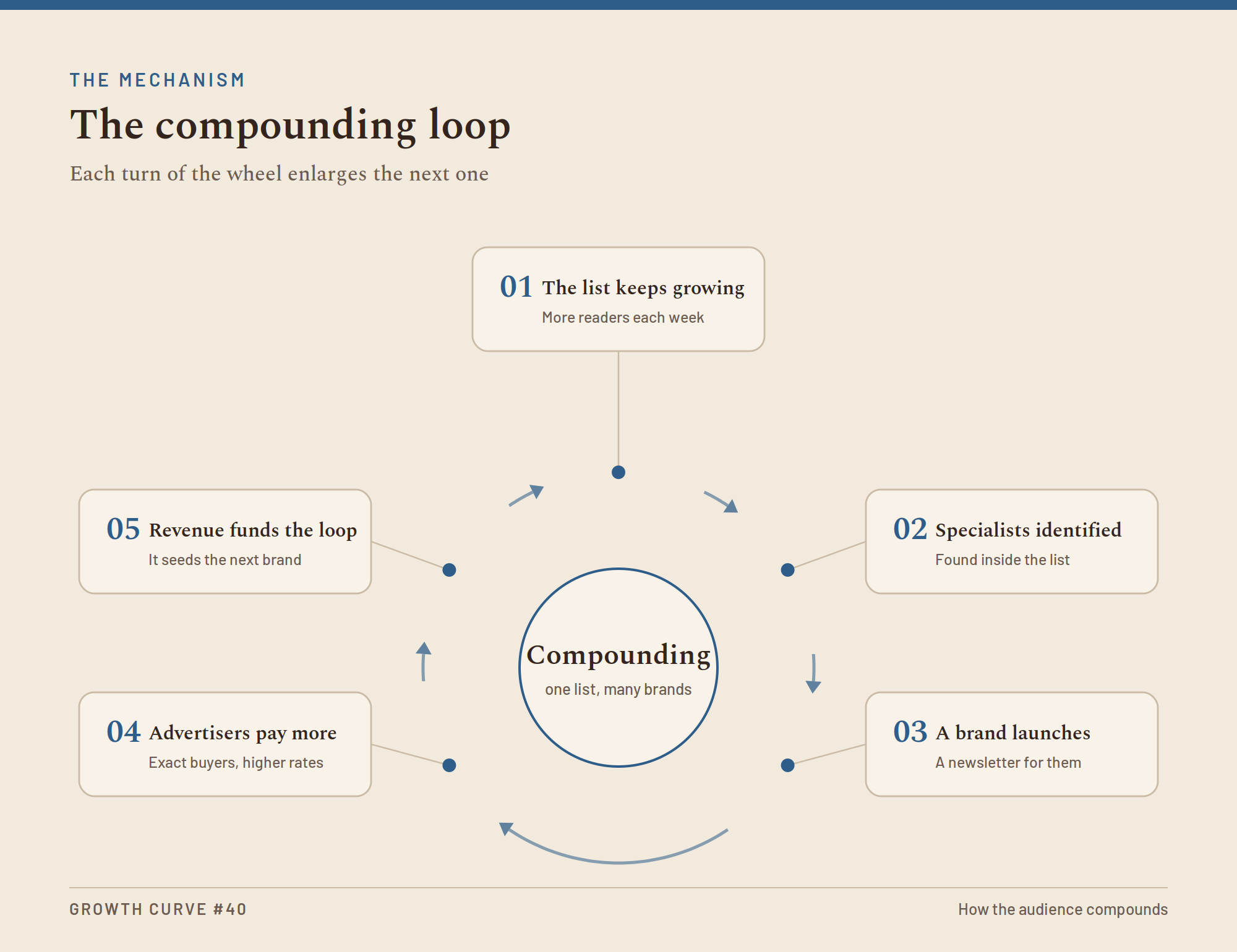
Austin Rief concluded a decade-long run in early 2025, and Robert Dippell became chief executive, arriving with B2B media experience from companies including Bisnow and the audience-data platform Omeda. The flagship daily newsletter remains large and profitable, with more than 4 million subscribers. The company has also expanded into podcasts, video, and creator-led shows, reports that a majority of its audience engagement now occurs outside email, and has its multimedia products on pace to exceed $10 million in 2025. The center of the business is the professional division. Morning Brew started with one broad audience and learned to identify the specialists inside it. That turned a single consumer newsletter into a business media company that sells to 8 professional audiences, each served by a separate set of advertisers.
-------
*** Every week, we pick apart how the world's best media brands got to where they are. This post is the long read. Growth Curve, our weekly newsletter, is the sharp version: same insight, shorter format, straight to your inbox. Subscribe free here. ***
-----------
Your newsletter won't build itself.


The 2000s Blog That Keeps Finding New Monetization Models
How Deadspin's Former Staff Built a Worker-Owned Media Company Without Outside Investors
Inside Puck’s Bet on Writer Ownership