How Two NBC Producers Built One of the Most Trusted Daily News Brands for Women


*** Every week, we pick apart how the world's best media brands got to where they are. This post is the long read. Growth Curve, our weekly newsletter, is the sharp version: same insight, shorter format, straight to your inbox. Subscribe free here. ***
------------
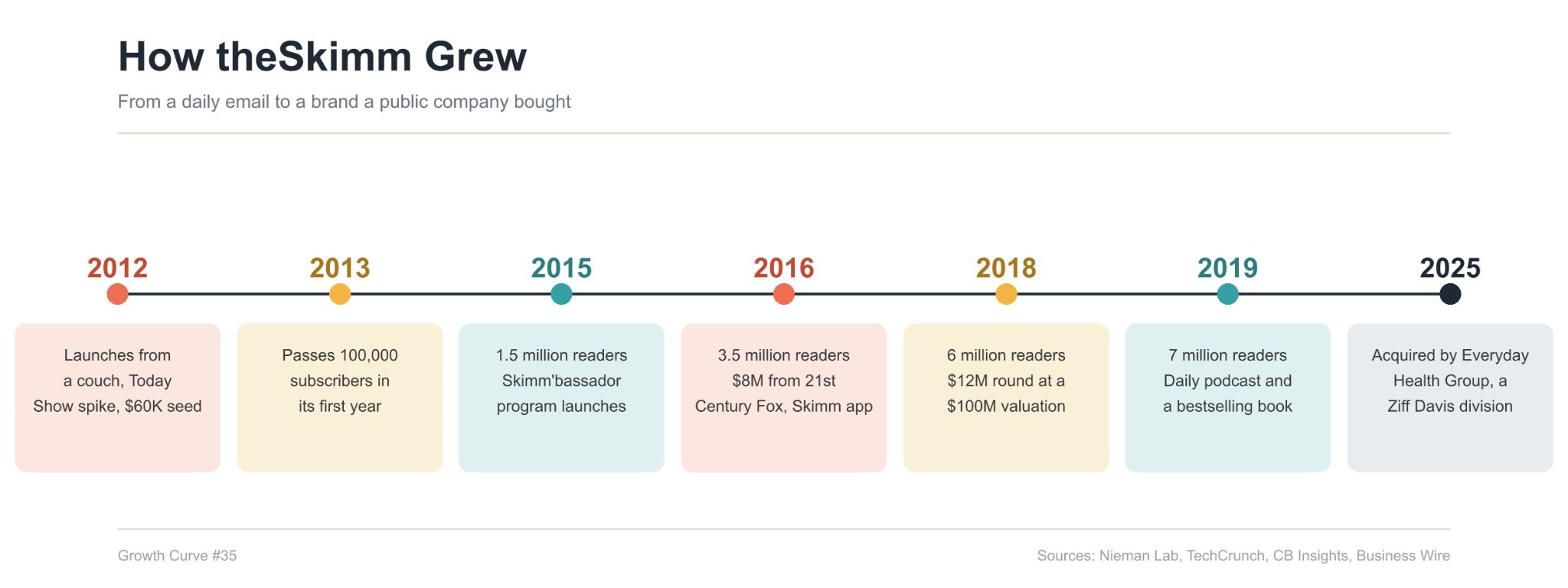
In the summer of 2012, Carly Zakin and Danielle Weisberg were roommates in New York and producers at NBC News. They had met years earlier studying abroad in Rome and reconnected over a shared habit of explaining the day's headlines to friends who were too busy to follow the news themselves. That July, they quit their jobs, sat on the couch in their apartment, and sent the first edition of a daily email called theSkimm to a few hundred people they knew. There was no business plan and no revenue. There was a list of friends and a unique voice.
The early break came on television. When the Today Show anchor Hoda Kotb mentioned the newsletter on air, sign-ups jumped, and in September 2012, the two founders raised $60,000 in seed money. Within roughly a year, theSkimm reached 100,000 subscribers. 7 years later, it reached more than 7 million users, had a $100 million valuation, and, in March 2025, was bought by Everyday Health Group, a division of the publicly traded company Ziff Davis.
Zakin and Weisberg were not subject experts. They were not economists, foreign correspondents, or market reporters. They held no beat, and every fact in the email had already run somewhere else first. What they brought was a clear sense of one reader and a voice that reader would recognize.
Built on the Couch
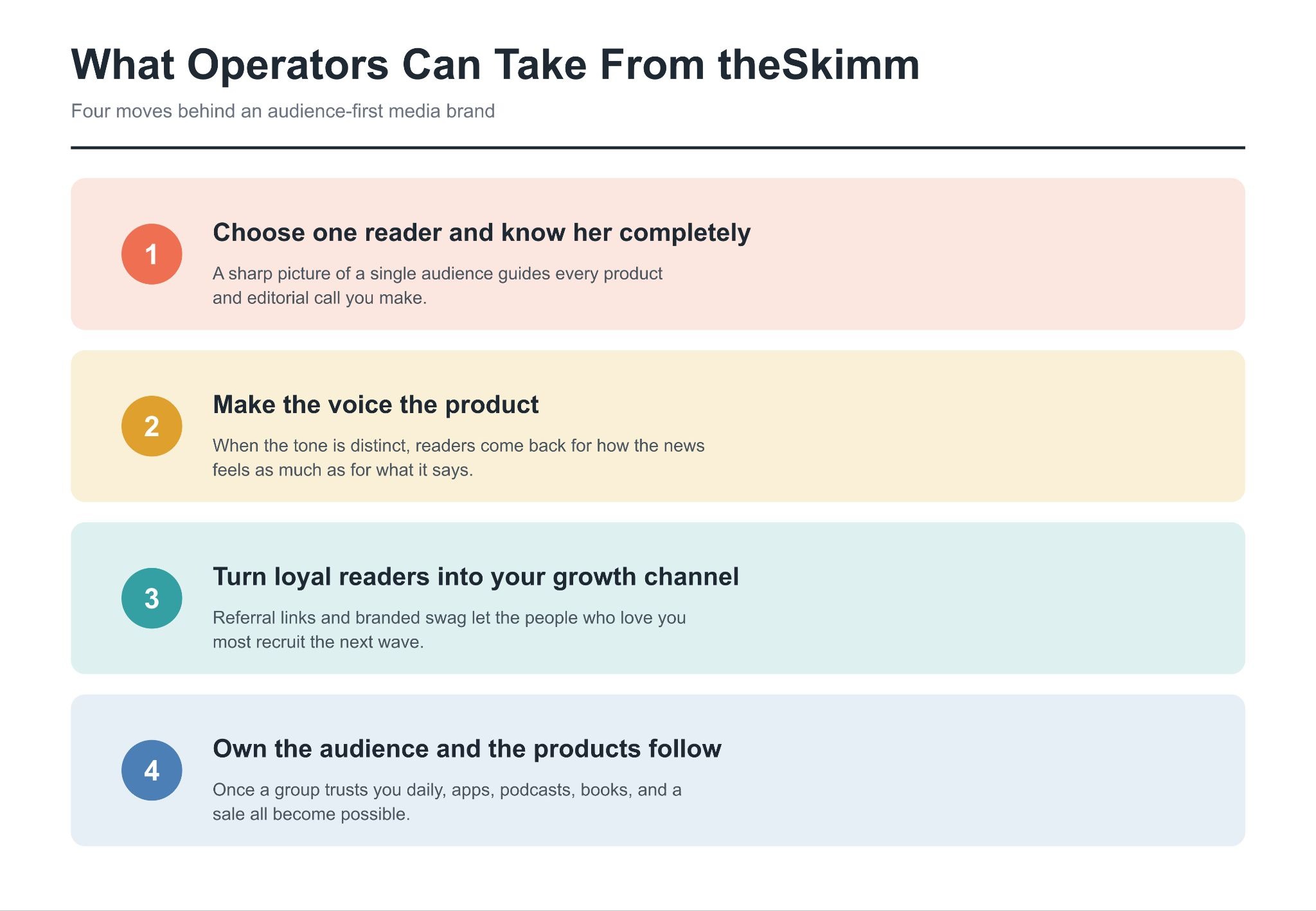
Most news organizations earn trust by knowing a subject better than their readers do. theSkimm earned it by knowing its reader better than other news organizations did. Zakin and Weisberg pictured a specific person, a smart and busy woman in her twenties who wanted to keep up with the news but did not have time to read four outlets before work.
The Daily Skimm landed before the workday, around six in the morning, and it was short enough to finish over a first cup of coffee. It explained why a story mattered to the reader's life and skipped the jargon that made traditional coverage feel like homework. It mixed hard news with a little pop culture so the email read like something a person would actually want to open. The reader's morning routine was the real specification, and the length, the timing, and the tone were all built to fit it.
The Voice Was the Product
The same news was available everywhere and cost nothing. What theSkimm sold was the version that sounded like it came from a friend. The voice was conversational and remained the same every single day, using recurring phrases and insider language that regular readers came to know. That consistency turned a daily email into a continuing conversation, and readers who recognized the voice started to feel like members. They called themselves Skimm'rs.
Demographic specificity can stand in for topic expertise when the voice is distinct enough to be missed when it is gone. A reader did not come to theSkimm for the scoop. She came because the brand understood her morning and spoke to it directly. It also meant theSkimm never had to win a fight it could not win, which was the fight for depth and access against newsrooms many times its size.
The Ambassadors
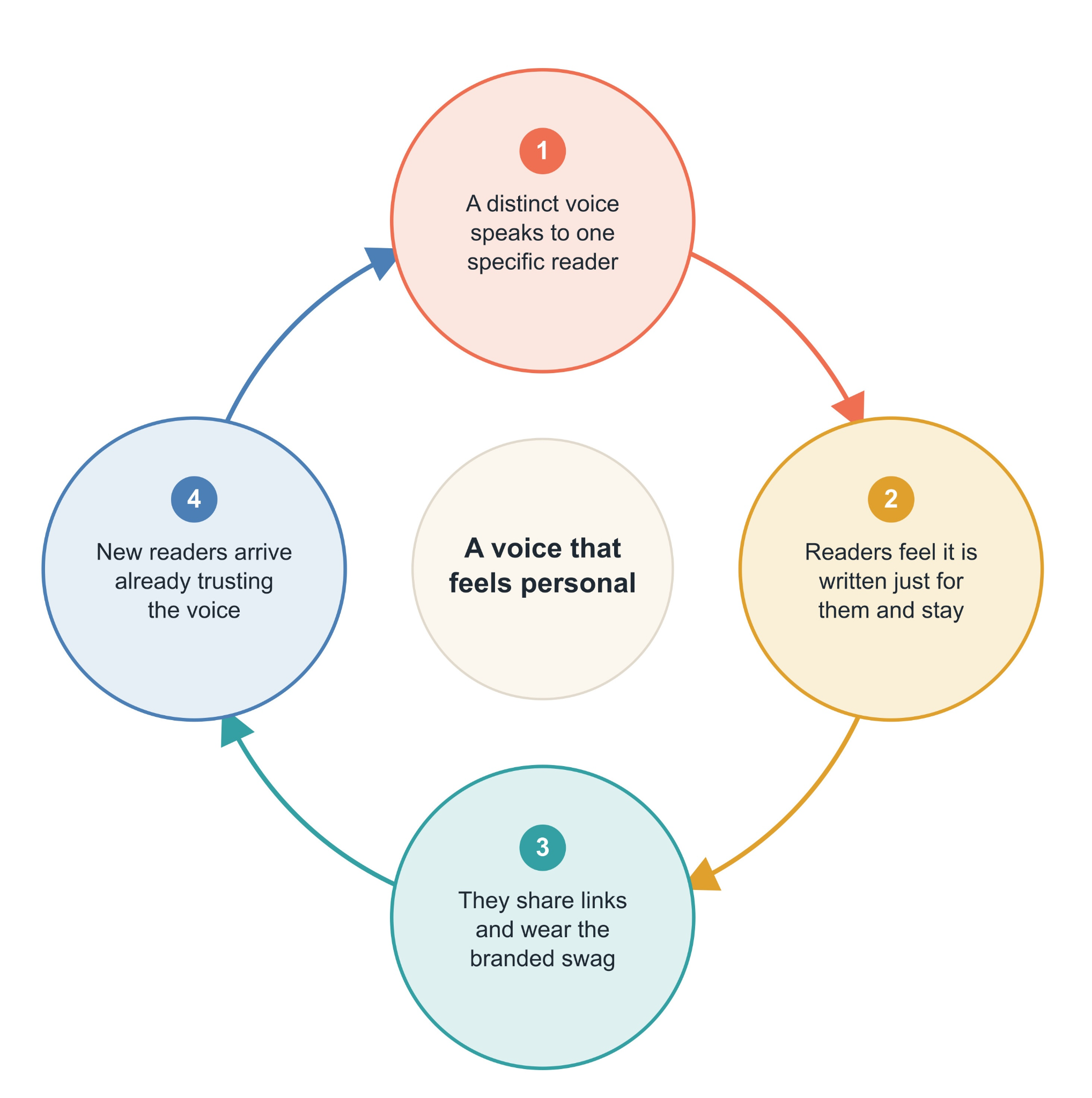
Because the relationship felt personal, readers were willing to grow it themselves. In late 2015, theSkimm gave loyal readers a unique referral link, counted the friends they signed up, and handed out rewards as the numbers climbed. The rewards were small and social rather than financial. They included branded merchandise, invitations to a private members page, and a title, Skimm'bassador, that readers wore with some pride.
The program became the company's main growth engine. Ambassadors shared their links on social media and over email, tabled on college campuses, and brought in friends. At its height, the network passed 30,000 active members. Investors saw what that loyalty was worth. In its first couple of years, theSkimm raised about $6.5 million from RRE Ventures, Homebrew, and backers including the comedian Chelsea Handler, then $8 million more in a 2016 round led by 21st Century Fox, and $12 million in 2018 from Google Ventures, Spanx founder Sara Blakely, Shonda Rhimes, and Tyra Banks. The total came to roughly $29 million, and the 2018 round valued the company at $100 million.
The subscriber curve tracked the program. theSkimm passed 100,000 readers in its first year, reached 1.5 million by the summer of 2015, climbed past 3.5 million by the middle of 2016, hit 4 million that November, and reached 7 million by 2019. Oprah Winfrey and Reese Witherspoon were among the readers.
Turning Down the Money
For the first few years, the founders refused most advertising. Brands they described as wish-list names came asking to sponsor the newsletter, and Zakin and Weisberg turned them down to keep the voice free of corporate obligation and to let the audience grow before they tried to earn from it. It was a risk, and it was the right one. A voice that readers trusted was the entire asset, and protecting it mattered more than early revenue.
When the company did monetize, it used the audience relationship rather than interrupting it. The early revenue came from native advertising written in theSkimm's own voice and from affiliate marketing, which earned the brand a cut when readers bought something it recommended. Both worked because readers trusted the recommendation, and by 2017, the founders said affiliate revenue had grown nearly 400% in six months. theSkimm later added a paid app at $2.99 a month and a separate business that helped brands reach its audience. Revenue was reported to have more than doubled year over year after 2016.
Everything Built on the Same Reader
Once theSkimm owned a defined audience's morning, it built products that used that attention rather than starting over with new readers. In 2016, it launched Skimm Ahead, a paid calendar app, and started Skimm Studios to make video for YouTube and Facebook Watch. It added an interview podcast and then a daily news podcast in 2019, and that June it published How to Skimm Your Life, which debuted on the New York Times bestseller list. It expanded the newsletter family to include money, parenting, weekend reading, and wellness, and launched a separate newsletter for marketers who wanted to reach its audience.
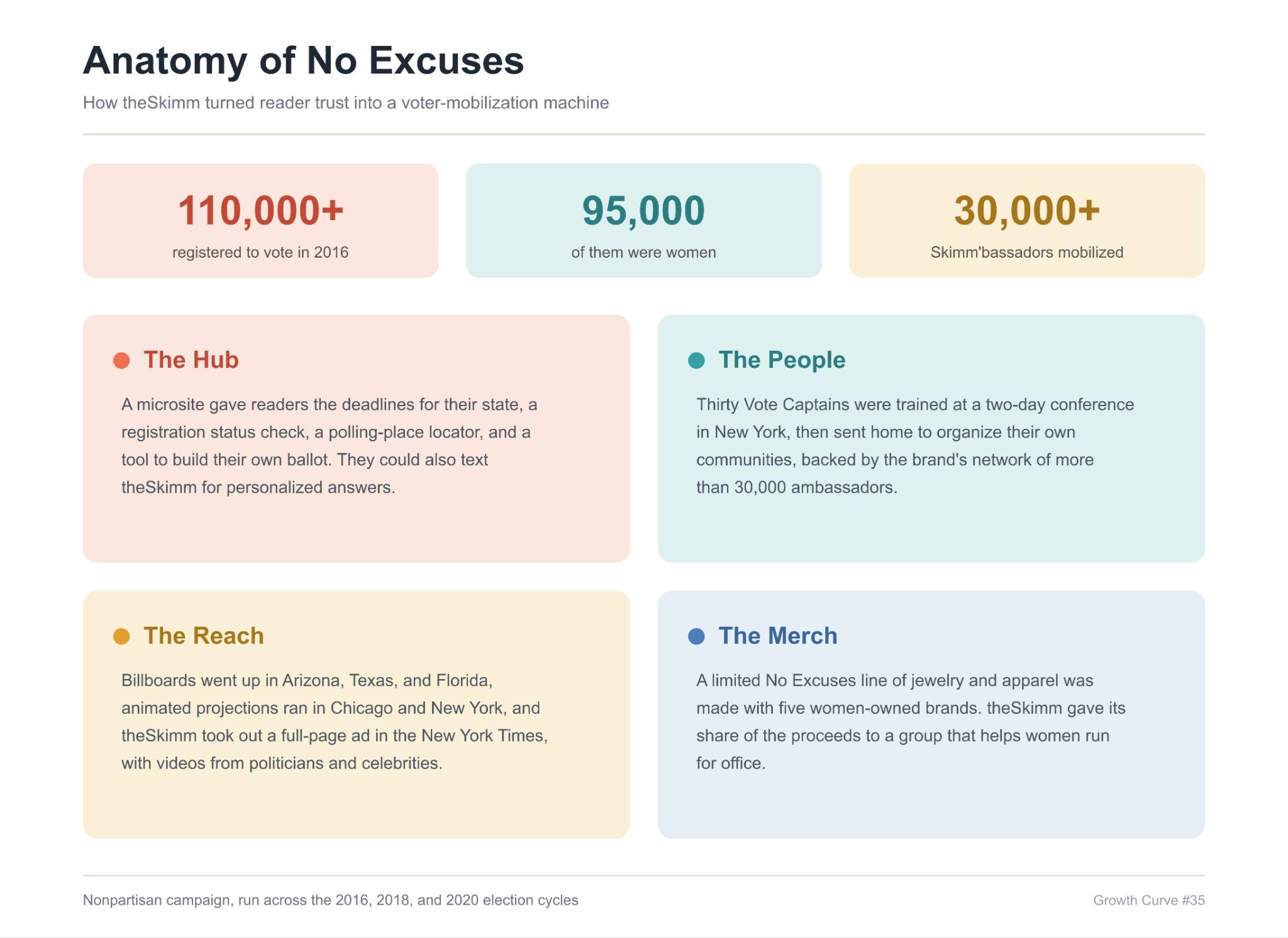
The No Excuses voter campaign began in 2016 and helped register more than 110,000 people, most of them women. theSkimm scaled it for the 2018 midterms with the goal of getting 100,000 people to actually vote. It ran a microsite with state-by-state deadlines and a tool to build a personal ballot, put up billboards in Arizona, Texas, and Florida, took out a full-page ad in the New York Times, and turned its thirty thousand ambassadors into local organizers. It even sold a No Excuses merchandise line made with women-owned brands and gave its share of the proceeds to a group that helps women run for office. None of this required theSkimm to become an expert in elections. It required readers to trust the voice telling them where to vote.
The Exit
A brand built on a single voice for a single reader has a built-in vulnerability. The voice has to stay distinct because the moment it sounds like everyone else, the reason to subscribe disappears, and the news beneath it becomes a commodity anyone can get for free. The audience also ages. theSkimm started with women in their twenties, and over a decade, those readers moved into careers, money decisions, parenting, and health. The company followed them, broadening its readership to multi-generational women and leaning into wellness, which is exactly what made it valuable to the buyer it eventually found.
When Everyday Health Group acquired theSkimm in March 2025, it was buying trusted daily access to millions of women, which slotted directly into a health and wellness portfolio already reaching tens of millions of consumers. The terms were not disclosed. The founders stayed on, and theSkimm joined a long line of independent media brands that Ziff Davis has rolled up over the years to assemble audiences it can serve at scale.
theSkimm is a case for starting with the reader instead of the subject. Most teams begin by asking what they know better than anyone else. Zakin and Weisberg began by asking exactly who they wanted to serve and how that person wanted to be spoken to, and they let the answer decide everything from the send time to the products they built.
They started on a couch with a list of friends and a way of writing. What they knew better than anyone else was their reader. Most media brands try to win by knowing more than their audience. theSkimm won by knowing one reader completely and showing up in her inbox every morning.
Your newsletter won't build itself.


The 2000s Blog That Keeps Finding New Monetization Models
How Deadspin's Former Staff Built a Worker-Owned Media Company Without Outside Investors
Inside Puck’s Bet on Writer Ownership