Newsletter vs. Podcast: Which Content Format Builds More Trust for B2B Brands?


Both formats ask for something a blog post never does: recurring attention from the same person, week after week. That's exactly why they're so often compared, and why the honest answer is that they build trust in different ways, for different audiences, at different costs.
What a Podcast Actually Does Well
A podcast carries something text can't: tone of voice, pacing, the small unscripted moments that make someone sound like a real person instead of a brand. A prospect who listens to 40 minutes of an unscripted conversation walks away with a sense of who's behind the company that a newsletter issue rarely delivers on its own.
Podcasts also open a door text can't: guest interviews. Bringing on a customer, a partner, or a respected voice in the industry gives a B2B podcast access to someone else's audience and credibility, in a way that's harder to replicate in a written newsletter.
What a Newsletter Actually Does Well
A newsletter asks for almost nothing from the reader: two minutes, no headphones, no dedicated listening time carved out of a commute. That lower barrier means a much larger share of subscribers actually consume each issue compared to the share of subscribers who play every new podcast episode.
A newsletter is also far easier to act on. A reader can hit reply in ten seconds. Replying to a podcast requires finding a contact method and writing a message from scratch, a much higher-friction action that most listeners never take even when they genuinely liked what they heard.
The Real Cost Difference
A podcast is heavier to produce well. Recording equipment, editing, hosting, guest coordination, and a genuinely good editing pass all take real time, or real budget if any of it is outsourced. A newsletter issue, even a well-researched one, takes a fraction of that production effort per piece of content.
That cost difference matters most in the first six months, when neither format has an audience yet and every hour spent producing content is a bet on something that hasn't proven out. A newsletter's lower cost per issue makes it a safer place to test whether a company has enough real material to sustain a recurring format at all, before committing to the heavier lift of a podcast.
Measuring Trust Looks Different for Each
Podcast trust shows up as listen-through rate: how much of an episode people actually finish. A high completion rate on a long episode is a strong trust signal, since nobody keeps listening to something they don't find worthwhile.
Newsletter trust shows up as replies and forwards. A subscriber hitting reply, unprompted, is arguably a stronger trust signal than a completed listen, since it requires the reader to take an active step rather than simply not clicking away.
Neither number translates cleanly into the other. Comparing a podcast's download count to a newsletter's open rate as if they measure the same thing is a common mistake, and it usually leads to over- or under-valuing one format based on numbers that were never meant to be compared directly.
Can They Work Together
Yes, and the strongest B2B content programs eventually run both, but rarely at the same time from day one. A common, sensible sequence: build the newsletter first, since it's cheaper to sustain and faster to learn what topics and formats actually land with the audience. Once that's established and there's a real backlog of insight and guest relationships, a podcast becomes a lower-risk addition, because the audience and the content muscle already exist.
Companies that launch both simultaneously with no existing audience often find neither one gets the attention it needs to actually build momentum, and the podcast in particular tends to be the one that quietly stops getting recorded after a few months.
What a Small Team Should Actually Do
For a team with one person able to spend meaningful time on content, a podcast is a hard commitment to sustain well. Recording, editing, and guest coordination compete directly with everything else that person is responsible for, and a podcast that goes quiet after six episodes damages credibility more than one that was never started.
A newsletter fits a single-person content operation far more realistically. It can be written around a normal workweek, it doesn't require anyone else's calendar to cooperate, and a rough issue that goes out on schedule beats a polished one that's three weeks late. Once the newsletter has a rhythm and a real backlog of material, adding occasional audio, even just a short voice recording embedded in an issue rather than a full podcast, can test whether the audience actually wants more before committing to a weekly recording schedule.
Your newsletter won't build itself.

Newsletter vs. Podcast: Which Content Format Builds More Trust for B2B Brands?
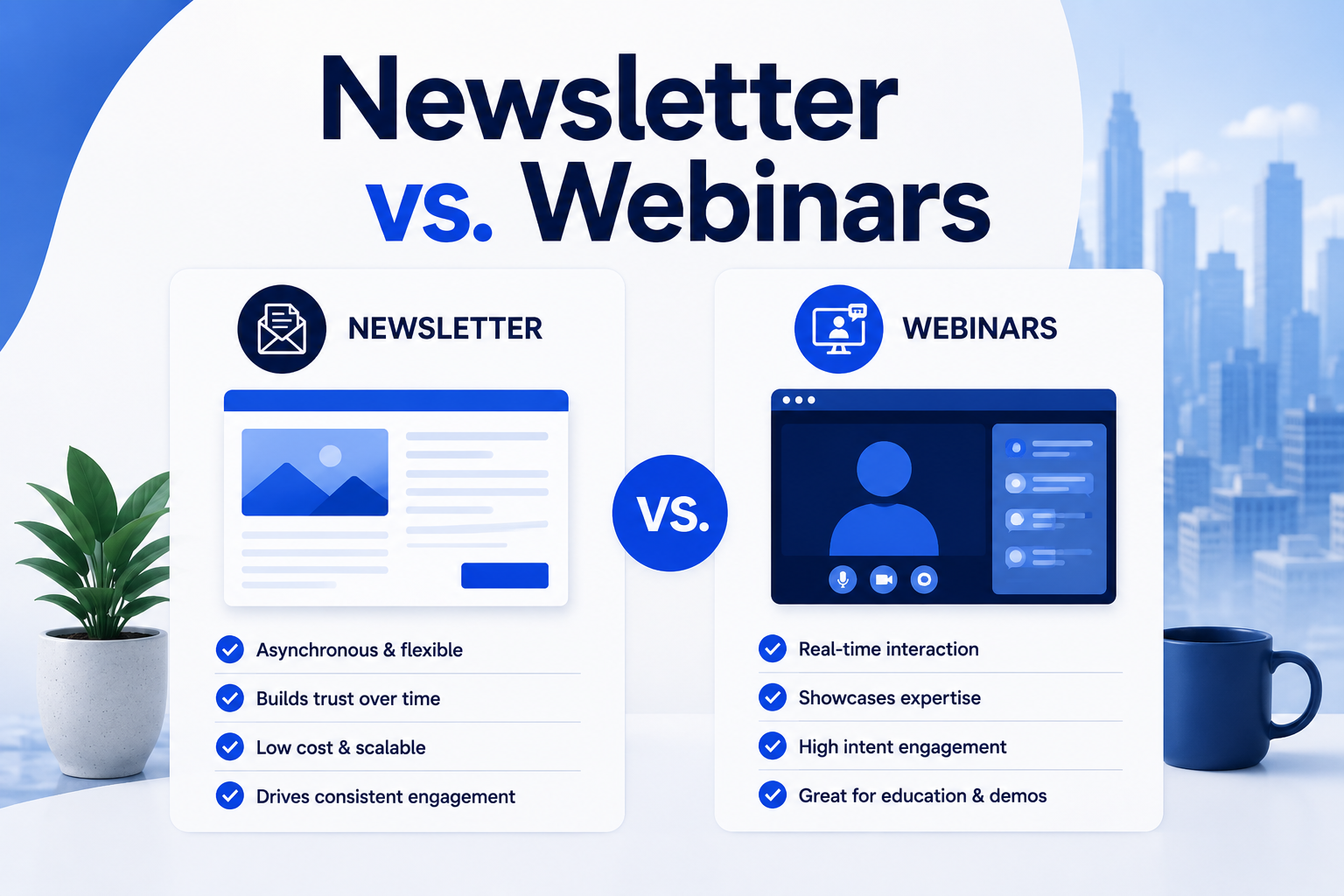
Newsletter vs. Webinars: Where Should B2B Marketing Teams Invest First?
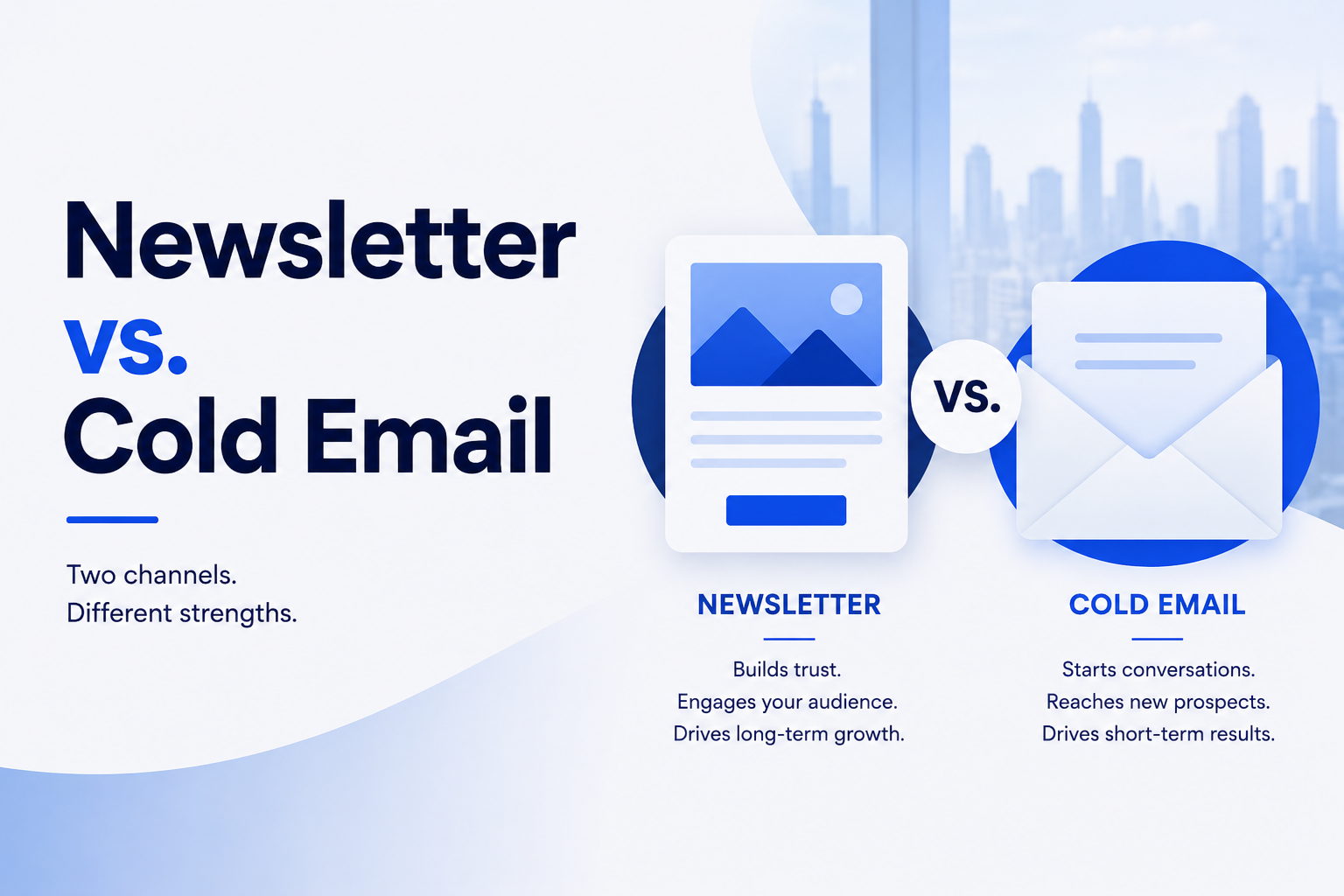
Newsletter vs. Cold Email/Outbound