What Is a B2B Newsletter? (And How It's Different From a Consumer One)
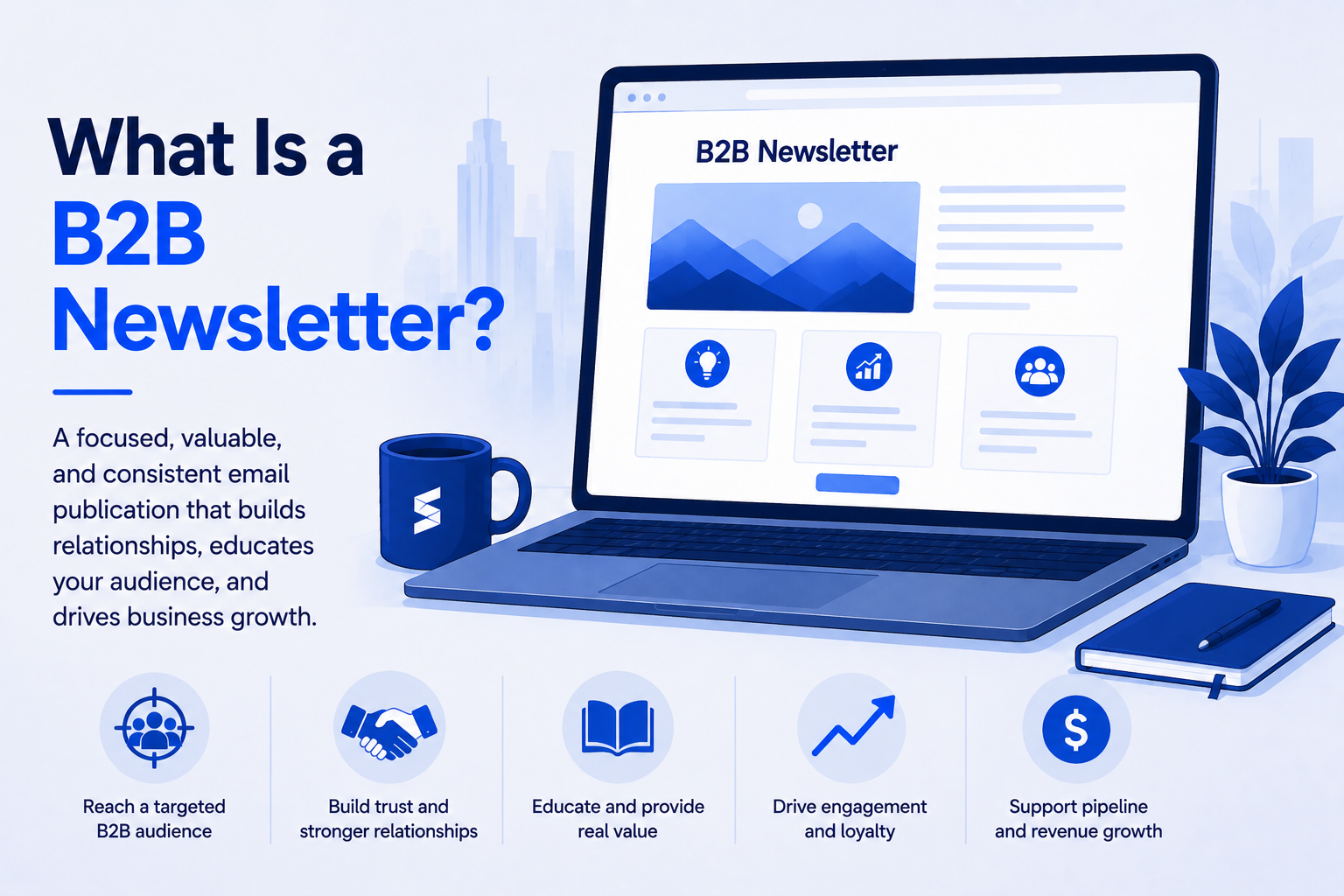

A B2B newsletter is a recurring email a company sends to the people who buy from it, or might buy from it someday: buyers, prospects, and the people inside another business who influence a purchase decision.
That's the short version. The real differences show up once you compare it to what most people picture when they hear "newsletter."
The Newsletter You're Probably Picturing
Think Morning Brew. The Hustle. A daily digest that lands in hundreds of thousands of inboxes because the writing is fast and the jokes land.
Consumer newsletters chase reach. More subscribers means more ad inventory, and more ad inventory means more revenue. The content has to work for a huge, loosely defined crowd: a student, a retiree, a marketing manager, all reading the same email at the same time.
A B2B newsletter runs on a completely different set of numbers.
The Actual Definition
A B2B newsletter goes to a small, specific list: the people who fit your ideal customer profile. Job title, industry, company size, all filtered on purpose. 500 of the right people beats 50,000 of the wrong ones.
It's built to earn trust with a buyer over months, so that when they're ready to spend money, your company is the one they already know and already read.
That's the whole job. Everything else is tactics.
What Actually Goes Into One
A single issue is usually short: one main idea, a supporting point, one call to action. Long enough to say something real, short enough that someone actually finishes it on their phone between meetings.
The content tends to come from a few places. An observation from a customer conversation that week. A specific result or number pulled from real work, not a hypothetical. A curated link with an actual opinion attached, not just "check this out." Sometimes a direct answer to a question a prospect asked on a sales call.
What doesn't belong: product announcements dressed up as content, generic list posts anyone could have written, anything that reads like a press release. Readers can tell the difference between a newsletter written to inform them and one written to sell them.
Where the Two Actually Diverge
Audience size. Consumer newsletters measure success in the hundreds of thousands. A strong B2B newsletter can drive real pipeline at 1,000 to 5,000 engaged subscribers, because every one of them is a potential buyer, not just a reader.
Open rates. A good consumer newsletter open rate sits around 20 to 25%. A well-targeted B2B newsletter regularly hits 35 to 50%, because the list is smaller and every subscriber actually asked to be there.
The business model. Consumer newsletters make money from the newsletter itself, through ads and sponsorships. The newsletter itself is a cost center for a B2B company. What it produces downstream, replies, demo requests, closed deals, is the actual revenue line.
Who writes it. Consumer newsletters are written by writers. B2B newsletters are usually written by, or with, the people closest to the customer: the founder, the head of marketing, sometimes sales. The voice matters more than the polish.
What "engagement" means. A consumer newsletter cares about clicks and shares. A B2B newsletter cares about replies. When a subscriber hits reply on your newsletter, that's a warm lead sitting in your inbox with zero cold outreach involved.
A Real Example of the Difference
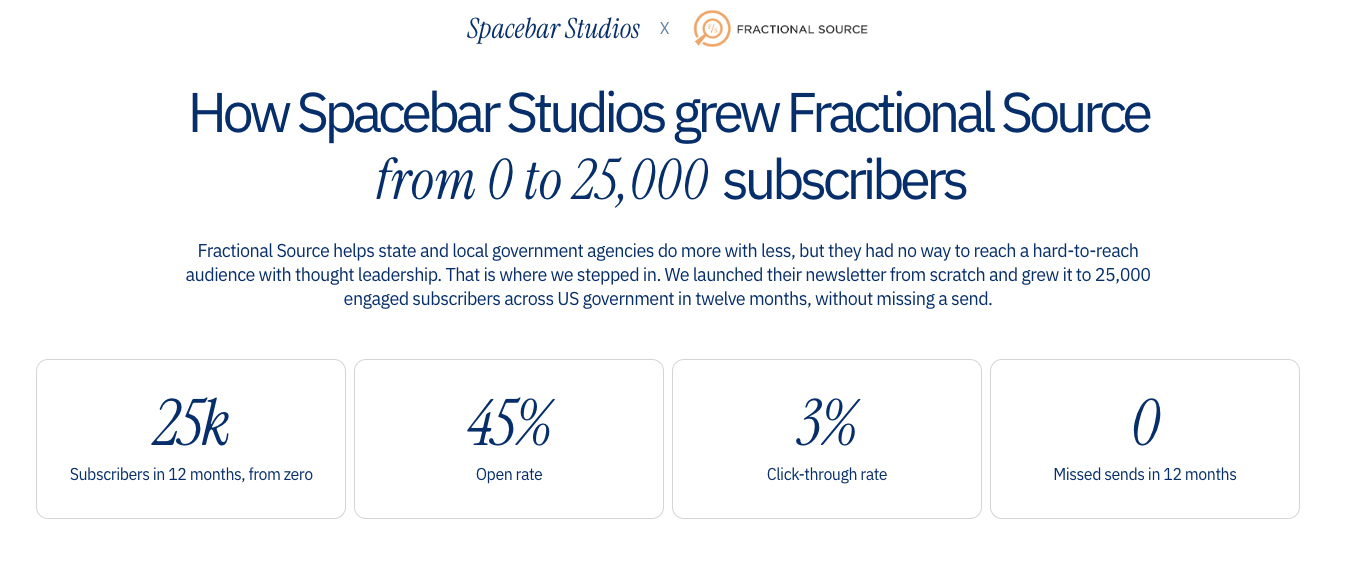
Fractional Source sells fractional sourcing services to state and local government agencies, about as far from a consumer audience as it gets. There was no existing channel to reach that audience with anything beyond a cold pitch.
We built a newsletter from zero, sent twice a week, aimed at government leaders specifically. Twelve months in: 25,000 subscribers, a 45% open rate, and a 3% click-through rate. Multiple deals in the pipeline traced straight back to it.
None of those numbers would mean much for a consumer newsletter chasing a mass audience. For a B2B list built around one narrow, well-matched audience, they're the whole story.
Why the Distinction Actually Matters
Most B2B newsletters that fail, fail because someone borrowed the consumer playbook. They chase subscriber count instead of subscriber fit. They write for everyone instead of for the 200 people who actually buy. They measure opens and ignore replies.
A B2B newsletter solves a completely different problem than Morning Brew does: staying in front of a buyer long enough that when the timing is right, you're the obvious call.
That's also why the two rarely compete for the same job inside a company. A consumer newsletter answers to a publisher or an ad team. A B2B newsletter answers to whoever owns pipeline, and gets judged on the same terms as any other channel that costs money and time.
If you want help building one from the ground up, book a free strategy call. We'll walk through what a B2B newsletter should actually look like for your business, not a generic template.
Your newsletter won't build itself.

What Is a B2B Newsletter? (And How It's Different From a Consumer One)
Newsletter Consultant vs. Newsletter Agency: Which One Actually Moves the Needle?

What Is a B2B Newsletter Agency (And What They Actually Do)