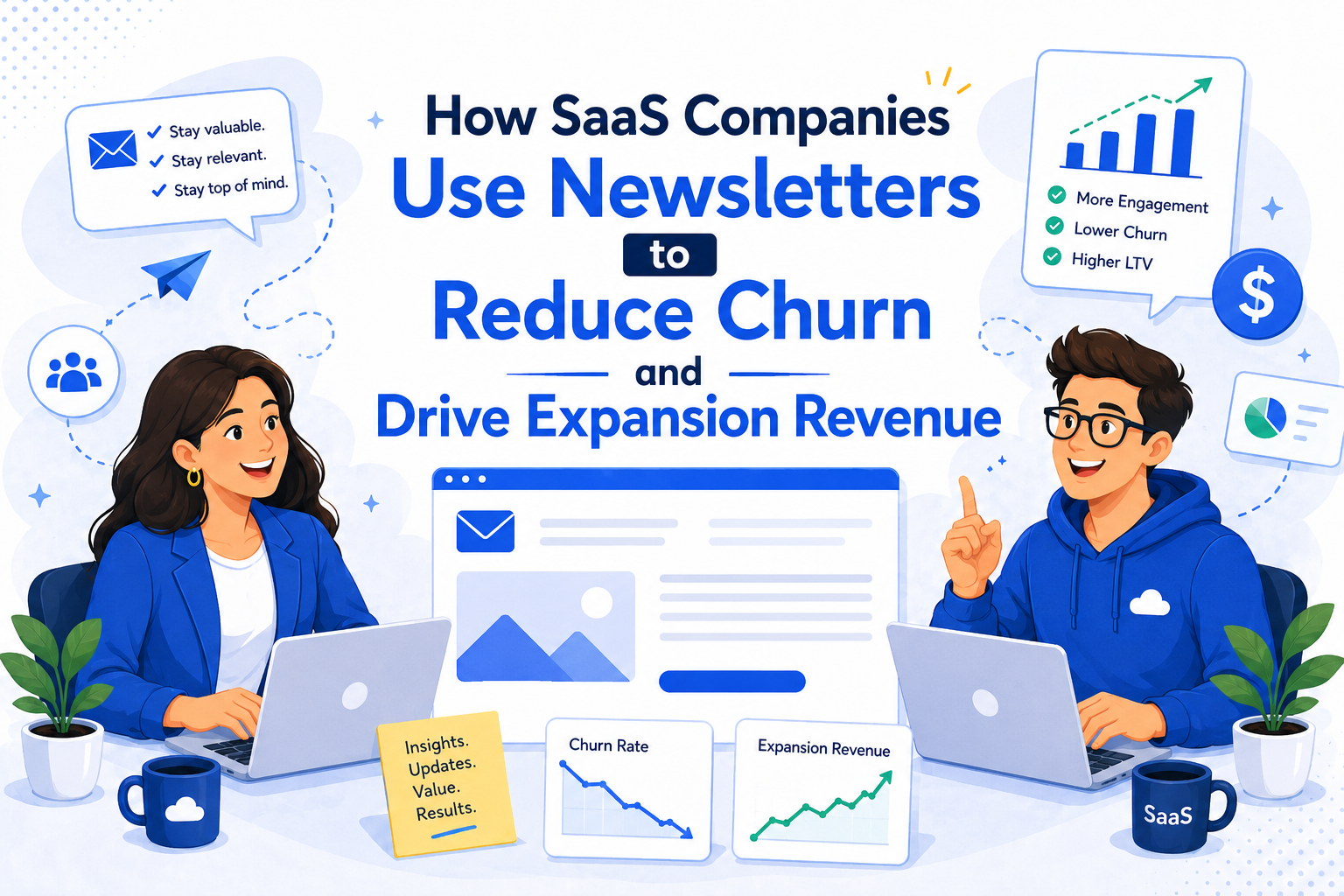
Why You Haven't Invested in Your Newsletter Yet (And Why You Should)


You probably know you should be doing more with your newsletter.
You’ve seen competitors publishing thoughtful content. You've subscribed to a few yourself. Maybe you even launched one last year... before it quietly died on the vine.
And it’s not because you don’t believe in newsletters — it’s just never felt urgent. Especially when ads, SEO, webinars, and LinkedIn posts are screaming for your attention.
But here’s the thing most B2B teams haven’t realized yet:
Your newsletter isn’t just another channel. It’s the only one you own. And in 2025, ownership matters more than ever.
Let’s talk about why you’ve probably put it off and why that delay is costing you.
You Don’t See Newsletters as a Growth Channel (Yet)
Most people still think of newsletters as nice-to-have brand content. You send one now and then. It gets a few opens. Maybe a click. But it doesn’t exactly scream “growth engine.”
So you double down on the usual suspects: paid media, SEO, LinkedIn reach. They're easier to justify. They look better on dashboards.
But here’s what’s changed in the last 12 months — and why it matters:
AI has completely flooded the content landscape.
Search is now a battlefield of auto-generated articles, AI summaries, and 10,000 posts that all sound the same. Google’s AI Overviews are burying organic results. Even great content struggles to get seen.
Meanwhile, social is louder than ever. Reach is throttled. Feeds are chaotic. And no one’s really clicking links anymore.
In that environment, your newsletter is one of the only ways to cut through the noise — and speak directly to the people who want to hear from you.
No algorithms. No bidding. No noise.
Just distribution you control.
You’re Prioritizing Ads, SEO, and Social Instead
And look — it makes sense. Ads are trackable. SEO has compounding potential. Social content is quick to ship.
But here’s what those channels all have in common: you’re renting them.
You pay to play. You’re subject to platform rules. And when you stop publishing or spending? The value dries up.
A newsletter, on the other hand, is an owned asset. It builds over time. Every new subscriber adds lifetime value. Every issue deepens trust. And unlike ads or social, the ROI improves the longer you stick with it.
Most B2B brands are overinvested in rented channels and underinvested in the one channel that builds trust at scale.
Don’t forget: with ads, the value disappears when you stop paying. With newsletters, the value compounds.
You Don’t Have a Clear Owner or Format
Here’s the other reason newsletters don’t stick: nobody really owns them.
Maybe marketing sends one “when there’s time.” Maybe it’s an intern's project. Or maybe it’s been sitting in a Notion doc since Q1, untouched.
The problem isn’t effort — it’s structure.
When your newsletter has no owner, no cadence, and no clear format, it’ll always feel like extra work. Something to check off the list.
But when you treat it like a product with a repeatable format, editorial voice, and clear audience — everything changes. It becomes a core part of your go-to-market strategy.
It becomes something you can grow, scale, and hand off without losing momentum.
You’re Underestimating What a Newsletter Can Be
The word “newsletter” undersells what it actually is.
It’s not just a roundup of blog posts. It’s not a company bulletin.
Done right, a newsletter becomes:
- A trust-building channel
- A lead nurturer
- A lightweight media property
- A reason people keep thinking about you
You’ve probably seen this firsthand.
Lenny’s Newsletter. Milk Road. The Pragmatic Engineer. Each of these started as a simple send — and evolved into real media assets.
Not fluff. Not hobbyist writing.
Distribution machines with influence, growth, and revenue behind them.
For B2B brands, this is a huge opportunity: build something people read every week — not because they have to, but because they want to.
The Newsletter You’re Ignoring Is Someone Else’s Advantage
While you're hesitating, someone else in your market is going all in.
They're using their newsletter to:
- Educate your shared audience
- Own the narrative in your category
- Build pipeline before your sales team ever makes contact
And every time your buyer sees their name instead of yours in their inbox, you’re ceding mindshare.
They’re not winning with better products.
They’re just showing up where you’re not.
In a world full of AI content and noisy timelines, your competitor’s newsletter is becoming a quiet advantage — one that compounds with every issue.
You can build yours now. Or play catch-up later.
Time to Build the Only Channel You Truly Own
This isn’t about adding another thing to your plate.
It’s about protecting your reach. Owning your audience. And building the one channel that works harder the longer you use it.
Newsletters aren’t for updates.
They’re for leverage.
In a world of noise, inbox real estate is still earned — and when you own it, it becomes a moat.
So if you haven’t invested in your newsletter yet, here’s your cue.
It’s not too late. But it won’t build itself.
Need help getting started?
Book a strategy call with Spacebar Studios and let’s map out your first 90 days.
Your newsletter won't build itself.

What Is a B2B Newsletter Agency (And What They Actually Do)
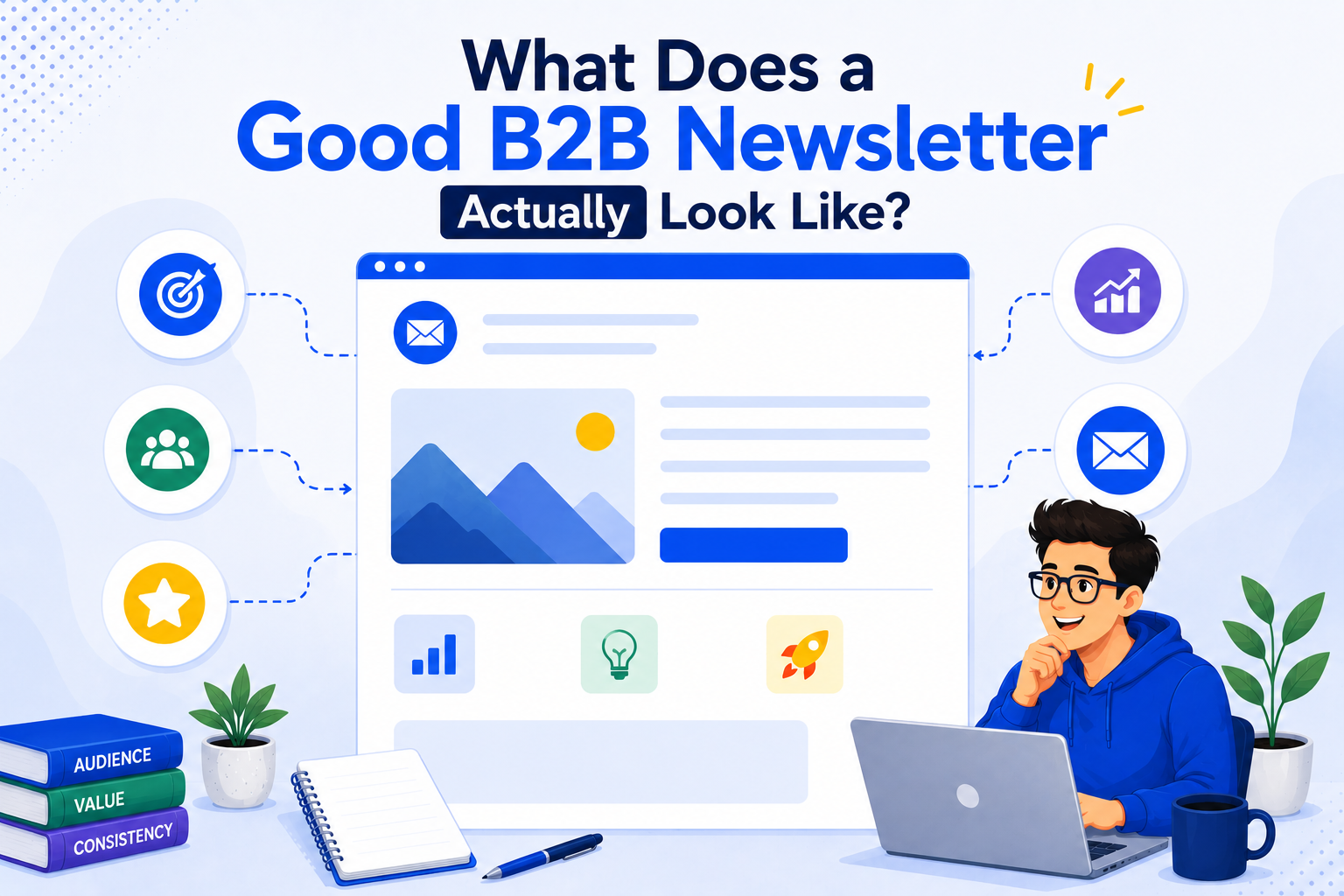
What Does a Good B2B Newsletter Actually Look Like?
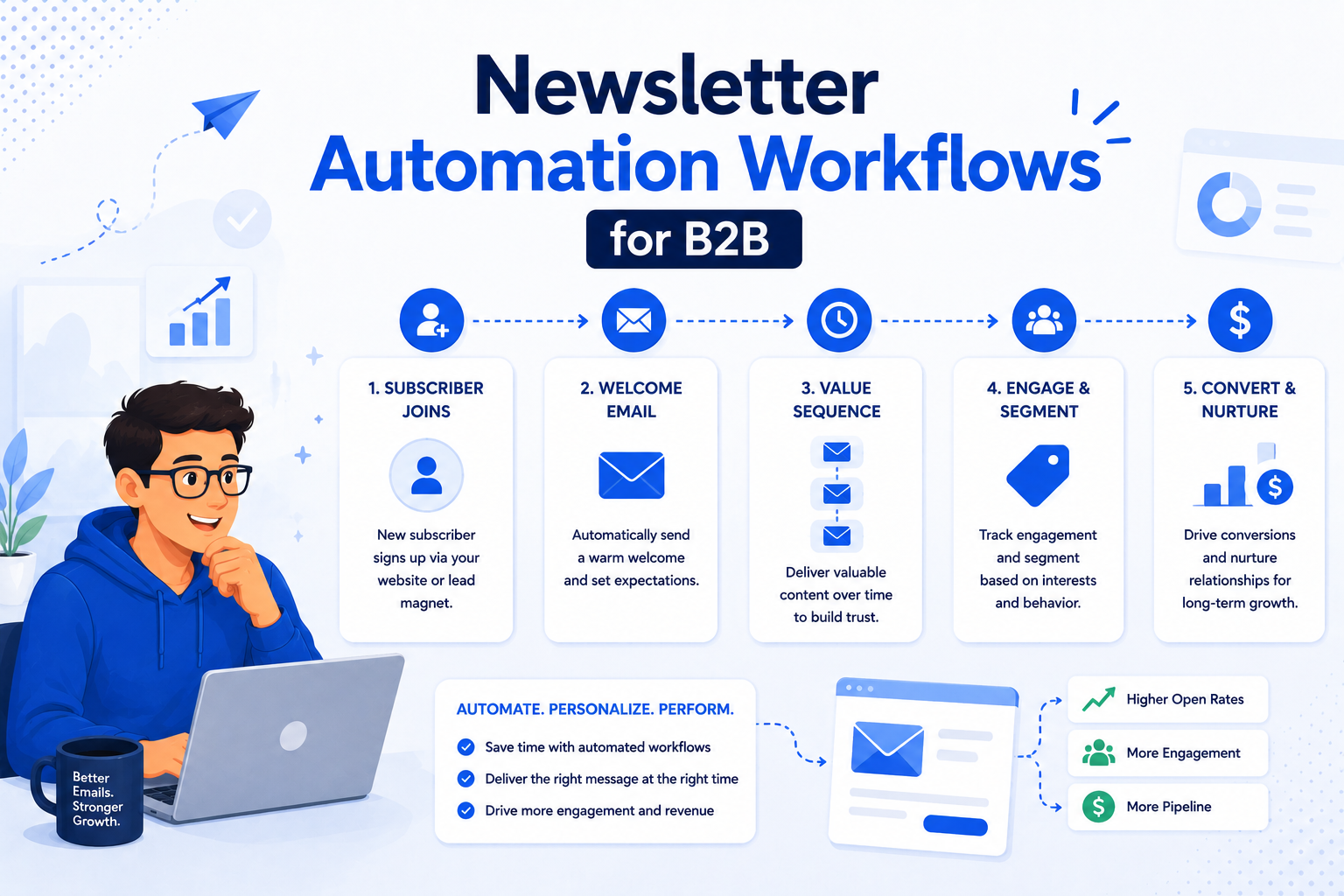
Newsletter Automation Workflows for B2B: Welcome Sequences, Re-Engagement, and More